
A SIL assessment determines the required integrity of a safety instrumented function. Learn how it fits into hazard analysis, design and lifecycle assurance.
A Safety Integrity Level (SIL) is a target for the integrity of a safety instrumented function (SIF). A team determines whether a SIF is needed and what integrity it must achieve through hazard and risk assessment. The SIL applies to the function, not as a blanket score for an entire plant or for a single instrument.
SIS, SIF and SIL mean different things
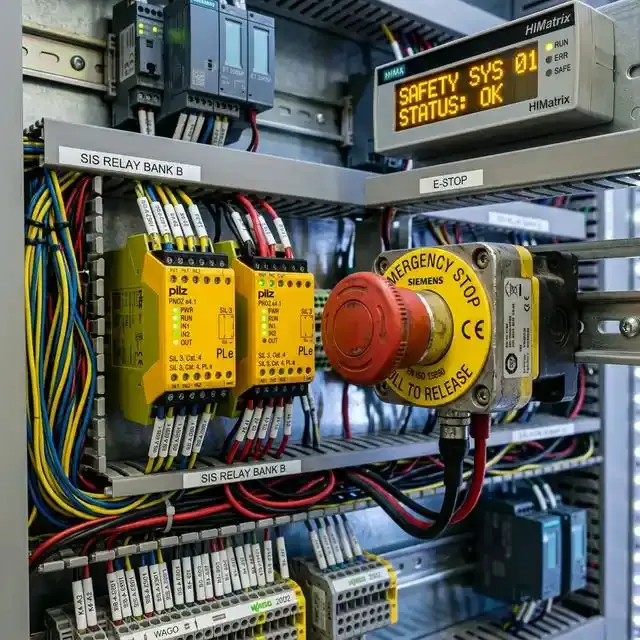
A safety instrumented system (SIS) is the system that implements one or more safety instrumented functions. A SIF has a defined purpose, such as detecting a hazardous condition and bringing a process to a safe state. Its sensors, logic solver and final elements work together to perform that function.
A SIL states the required integrity level for a SIF. It does not prove that the installed function meets its target. Design, integration, operation, proof testing, maintenance and management of change all affect whether the function can deliver the required risk reduction.
IEC 61511 sets lifecycle requirements for safety instrumented systems in the process industry. Its related guidance explains methods for determining required SILs, but the standard does not prescribe one SIL for a particular process or hazard in general. Use the current licensed edition and the project’s governing requirements.
When should a team assess a SIF?
Start with the hazard scenarios, not with a preferred instrument or a target SIL. HAZOP, LOPA or another suitable risk method can identify scenarios where the existing independent safeguards may not reduce risk sufficiently. The assessment may conclude that a SIF is warranted, that another risk-reduction measure is preferable, or that the available information is not enough to decide.
A high-hazard classification alone does not mean every facility must install a SIS. In South Africa, MHI regulation 10 requires a risk assessment by an Approved Inspection Authority in accordance with SANS 1461 at intervals not exceeding five years or when the establishment changes. The Regulations do not assign a SIL to every establishment or every hazard. Confirm the facility-specific requirements through the applicable law, assessment basis and licensed standards.
Define the function before selecting its integrity target
For each proposed SIF, document:
- the initiating condition and hazardous consequence;
- the sensors, logic solver and final elements included in the function;
- the process state the function must achieve;
- response time and other functional requirements;
- the risk-reduction target and how it was derived;
- assumptions about demand rate, proof testing, bypasses and supporting utilities;
- independence from other credited safeguards.
A generic label such as “high-high level trip” is not enough. State what measurement triggers the function, what action follows, how quickly the action must occur and how the team will verify performance.
Keep the lifecycle evidence together
The safety lifecycle records why the function exists, its required behavior, design basis, verification and validation, operating procedures, test results, failures, bypasses and changes. Define acceptance criteria before testing. Investigate any failed test against the function’s safety requirements and close the cause, not only the repair work order.
Do not credit an alarm and operator response as equivalent to an automatic SIF without evaluating the response time, independence, workload, procedures, training and reliability assumptions. Keep the assessment consistent with how the facility actually operates.
Questions about SIL assessments
Is SIL assigned to a whole plant?
No. SIL is assigned to a safety instrumented function. A single SIS may implement several functions, and each function needs its own requirements and evidence.
Does a SIL 2 device make the complete function SIL 2?
No. A component rating alone does not demonstrate the integrity of the complete SIF. The sensor, logic solver, final element, architecture, application, testing and lifecycle controls all matter.
Does South African MHI law require a SIS at every high-hazard facility?
The MHI Regulations require a risk assessment in accordance with SANS 1461. They do not state that every high-hazard establishment must have a SIS or a particular SIL. Determine the necessary safeguards from the site’s assessed scenarios and applicable requirements.