
Safety Culture Surveys: Turn Workforce Feedback Into Process Safety Action
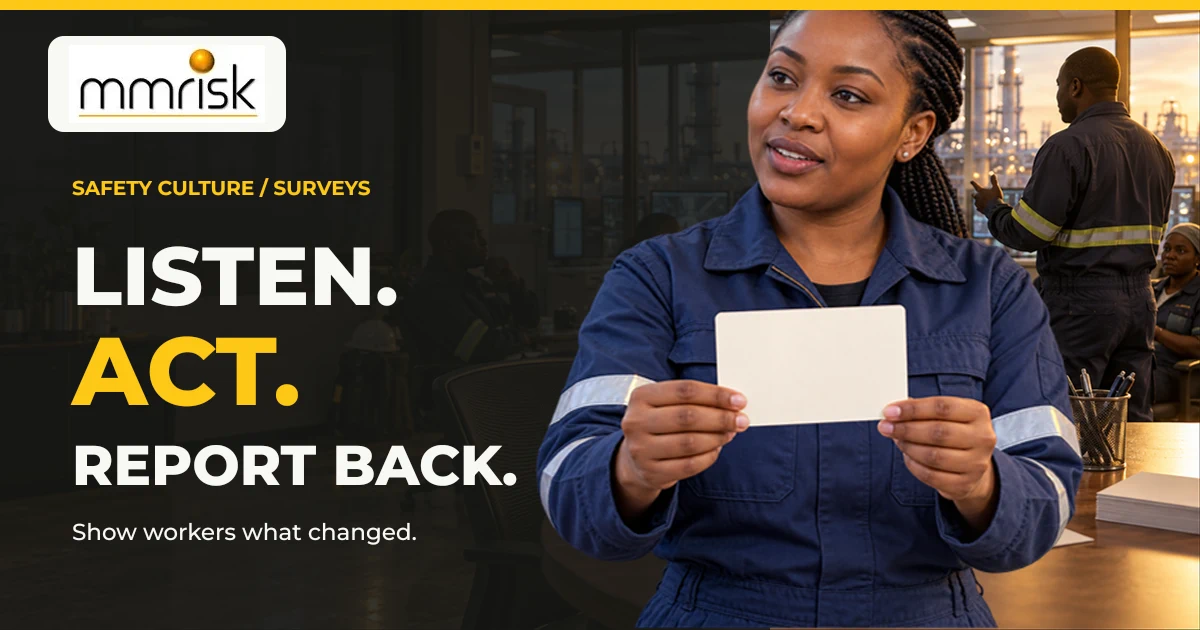
A survey is useful when workers can answer candidly and managers can show what changed because of the feedback.
Safety Culture Surveys: Turn Workforce Feedback Into Process Safety Action
A safety culture survey only helps when people can answer honestly and see a response. A completed questionnaire is not evidence that the work environment improved. The value comes from what leaders learn, what they change and how they report back.
Use a survey to explore conditions that routine metrics miss: whether workers can stop unsafe work, whether reports receive a timely response, whether production pressure affects decisions, and whether procedures match the job as done. Pair responses with interviews, observations, incident learning and equipment data. A survey records perceptions at one point in time; it cannot prove that a safeguard is effective.
Design for candid answers
Start with a clear question and a short set of measures. Ask about observable conditions, such as whether operators receive feedback after reporting a hazard, instead of asking broad questions like “Is safety important here?” Use plain language and translate where needed. Include contractors and shift patterns in the plan so the results do not describe only office-hours staff.
Explain who will see responses, how results will be grouped, what data will be retained and how workers can raise a concern outside the survey. Do not promise anonymity if small teams or demographic details could identify respondents. Use independent handling or minimum group-size rules where appropriate, and explain those limits before people take part.
OSHA’s worker participation guidance warns that fear of retaliation can suppress reporting and participation. Its current Safety Champions guide includes an anonymous baseline survey and an action plan as ways to understand and improve safety culture. These are U.S. resources, not South African legal requirements, but they offer practical design ideas.
Turn findings into owned work
Before launch, decide who will interpret results and who can fund corrective actions. After collection:
- Review response coverage by shift, role and employment type without exposing individuals.
- Compare themes with operational evidence, including near misses, maintenance backlogs and action closure.
- Select a few high-priority issues and assign an accountable owner, due date and measure of completion.
- Tell workers what the site heard, what it will change and what it cannot change yet.
- Repeat the measure after enough time has passed to assess whether the response worked.
Do not tie bonuses to favourable survey scores or low incident-report counts. That creates pressure to under-report and weakens the evidence. Give managers credit for addressing risks openly, not for producing a convenient result.
For South African MHI sites, connect workforce feedback to hazard identification, operating procedures, emergency readiness and the risk assessment process. MMRisk’s MHI services and worker participation article provide related guidance. Contact our team to discuss a practical assessment or training session.