
Who Is Accountable for a Contractor-Operated Tailings Facility?
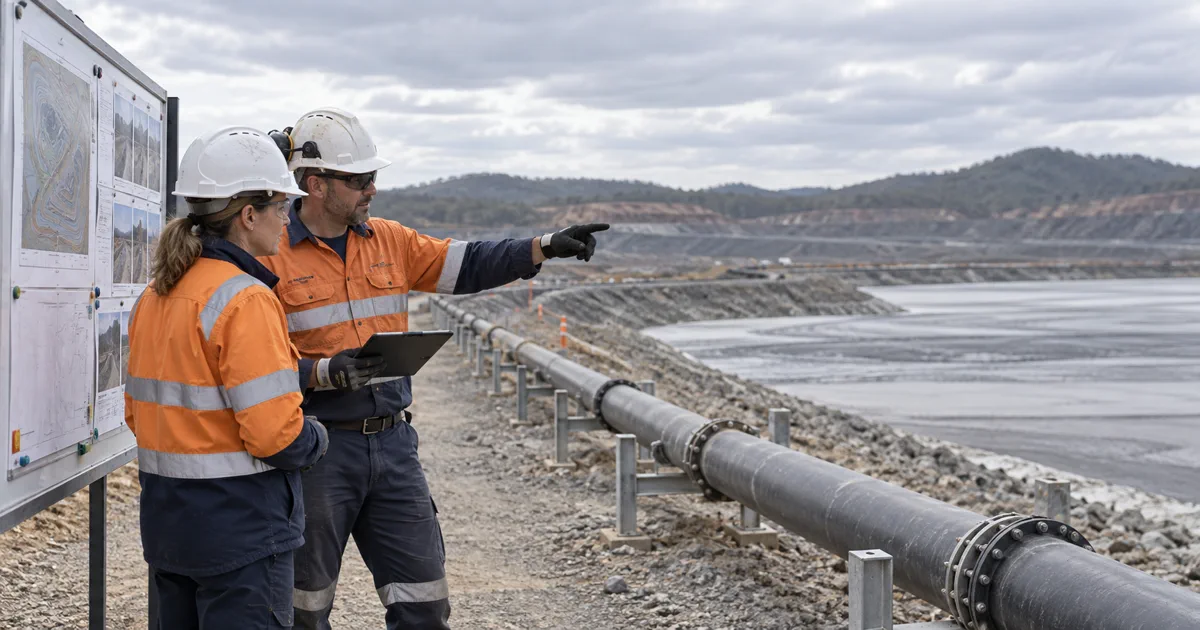
Contracting out operation does not contract out the consequences. Build accountable controls for contractor-operated tailings facilities.
If a contractor operates part of your tailings system, your board still needs clear answers about authority, competence, data access and escalation. A contract cannot replace accountable engineering and operational control.
Reporting on Dikwena stated that the facility was operated by a contractor while the mine owner took responsibility for investigation, clean-up and rehabilitation. The final technical cause remains under investigation. Treat that distinction as a governance lesson, not a finding about fault. Miningmx reported the ownership and operating context.
Set the decision rights in writing
Name the person who may change deposition, respond to abnormal monitoring, suspend work and call external support. Define when the operator must escalate and how the owner receives evidence. Do not rely on job titles alone.
Require contractor competence records, shift handover standards, inspection evidence and action closure in the same system used by the owner. Give the engineer of record access to the raw monitoring data and the contractor’s change log.
Audit the interface
Review who owns each barrier: decant controls, freeboard, instrumentation, emergency equipment, water management, public warning and rehabilitation. Test a scenario where the contractor cannot reach the site or loses power. If the owner cannot make a safe decision without a single contractor employee, the interface needs redesign.
Make the interface auditable
MMRisk can map your owner, contractor and engineering responsibilities into a barrier and escalation matrix. You receive a practical list of decisions, records and review points that can be tested before an incident exposes the gaps.
Request a Contractor-Interface Risk Review
Download the Tailings Facility Inspection and Action Register