
Tailings Monitoring Data Review: How to Escalate Before a Dam Failure
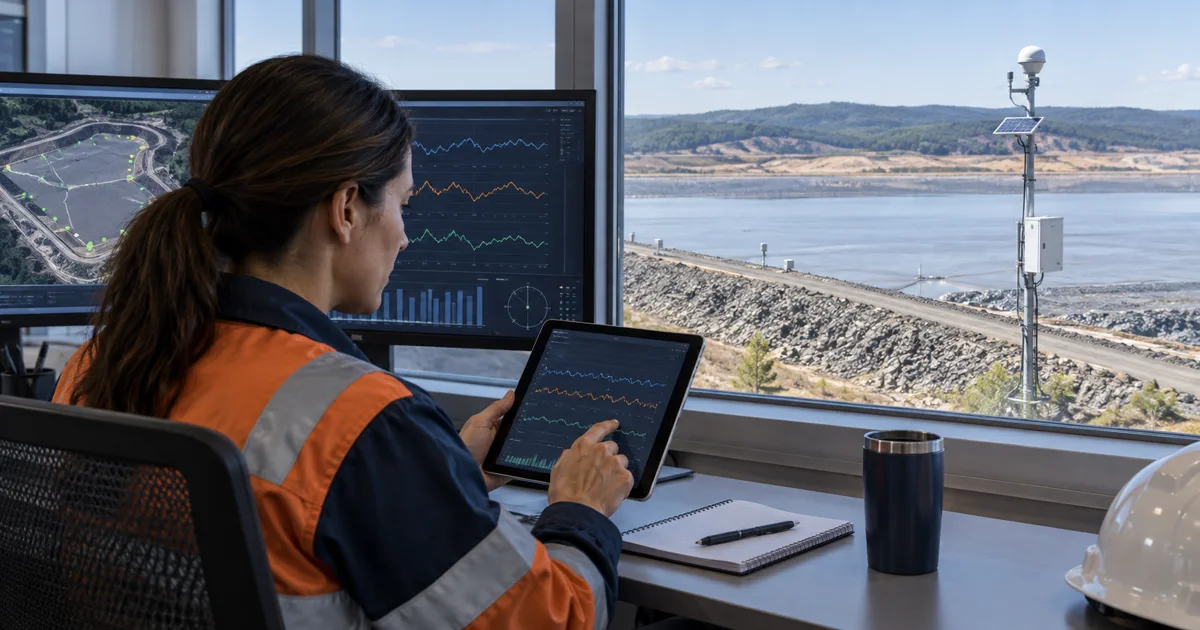
Monitoring protects a tailings facility only when competent people compare trends with limits and act before conditions become unstable.
Collecting piezometer readings and survey points does not manage risk. Your site needs agreed limits, review intervals, competent interpretation and authority to change or stop deposition.
After Dikwena, government deployed dam-safety engineers and water specialists to assess containment integrity and environmental impact. That response shows the records that matter after an event: data trends, decisions, action history and proof that the facility operated within its approved basis. SAnews states that the technical and operational cause remains under investigation.
Build an escalation ladder
Set alert, alarm and action thresholds for each relevant parameter. Define who reviews them, how quickly they must respond and what operational restriction follows. Put the decision record next to the data trend.
Review data quality before you debate the trend. Check instrument condition, survey references, missing readings, manual entries and changes to the monitoring network. A false sense of normality can form when a failed instrument produces a familiar number.
Ask the board-level question
Can the accountable executive see the last abnormal trend, the operational decision, the engineer’s advice and the closure evidence? If not, the site has data but not assurance.
Review the decisions behind the graph
MMRisk can review your monitoring escalation ladder, data-quality checks and management reporting route. Start the enquiry with the instrument types you use, the trend that concerns you and the decision you need to make.
Request a Tailings Monitoring Assurance Review
Download the Tailings Facility Inspection and Action Register