
Tailings Storage Facility Inspection Checklist for South African Mines
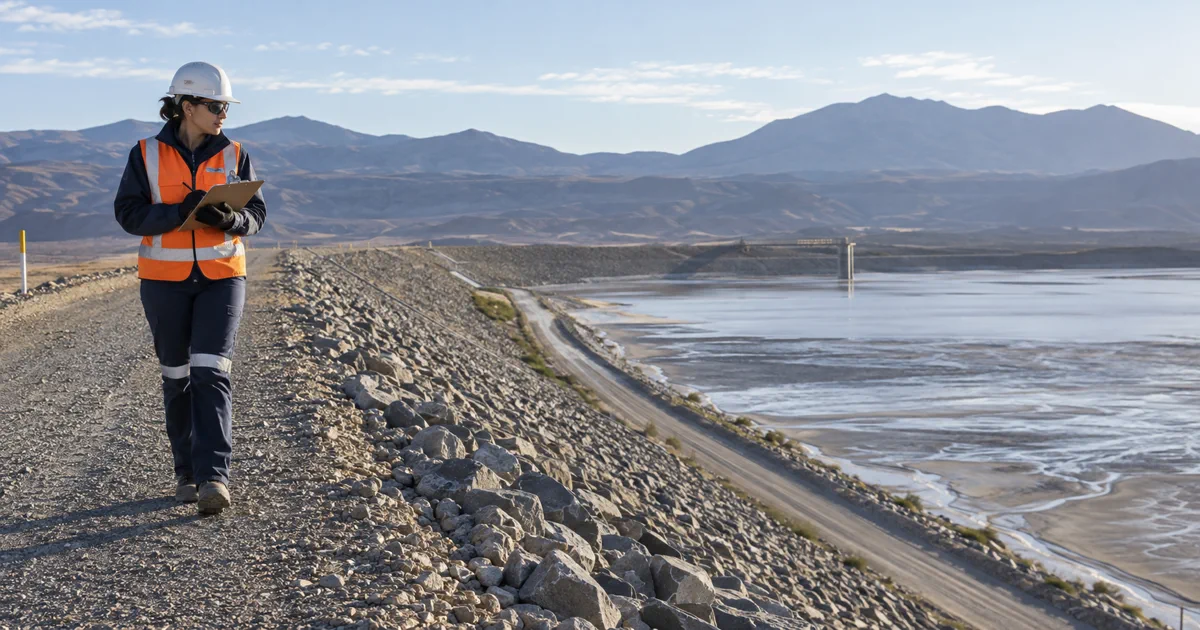
Use this inspection checklist to identify missing evidence, unresolved defects and weak escalation before a tailings facility failure puts people, production and water at risk.
Your tailings facility does not need another inspection form that disappears into a shared drive. It needs an inspection record that shows who checked each control, what they found, who owns the action and when a competent person verified closure.
The Dikwena Chrome incident near Brits showed the operational cost of weak assurance. After the northern wall of Compartment 1B failed on 13 August 2026, government stopped further tailings deposition while investigations continued. The event damaged infrastructure, power lines and a watercourse. The investigation has not yet established the cause. SAnews records the confirmed facts.
Who should use this checklist
Use it when you manage a tailings storage facility, lead mine operations, supervise a contractor, support the engineer of record or prepare a management-risk review. It does not replace an engineering assessment. It gives each role a common record for the conditions that require action.
The most useful time to use the register is before a visible defect becomes a production argument. Complete it after heavy rain, a change to deposition, an instrument failure, a repair, an unexpected trend or any field observation that does not fit the approved operating basis.
Keep completed registers accessible to the next shift and review team.
What your inspection must prove
Inspectors need current drawings, design assumptions, deposition records, water-balance information, monitoring trends and records of previous defects. A walkdown without those records cannot test whether the facility operates within its approved basis.
Record physical observations in a form that another engineer can understand: crest condition, slopes, drains, seepage, pond location, freeboard, erosion, settlement, access and instrumentation condition. Link every abnormal finding to a risk ranking, owner, due date and interim restriction.
Questions that expose weak control
- Can the accountable manager see overdue defects and their risk rating?
- Does the engineer of record receive monitoring trends and inspection findings at an agreed frequency?
- Does the operating team know which condition requires an immediate stop, escalation or emergency response?
- Can you show that contractors work to the same inspection and escalation rules?
SANS 10286 and the mandatory code-of-practice framework require life-cycle management of mine residue deposits. The Global Industry Standard on Tailings Management also expects operators to manage monitoring, governance and emergency preparedness as connected controls.
Start with the operating basis
Before a team walks the embankment, give it the current operating basis. That includes the approved deposition plan, pond-management requirements, water-balance assumptions, freeboard limits, monitoring plan and the most recent engineering review. The inspection then tests a real question: does the facility remain within the conditions that the design and operating plan assumed?
This step avoids a common failure. Teams can record a crest condition or a wet area without deciding whether it is acceptable for the facility's current stage, loading and water condition. If the answer is unclear, the register should trigger engineering review and a documented operating restriction. It should not leave the condition as an observation for the next monthly meeting.
Give every finding a decision route
Use a simple three-level route for the site. A routine finding needs an owner and a due date. An abnormal condition needs a defined technical review period and increased monitoring. A condition that may affect containment, stability or warning time needs an immediate escalation to the accountable manager and engineer of record, with a decision on deposition or other operating restrictions.
Keep the original observation, photograph, location, data extract and decision in one record. That protects the team from a later argument about what was known, who received it or whether the risk was accepted. It also helps directors see the difference between overdue maintenance and an unresolved safety-critical condition.
Use the register at management review
Do not report only the number of completed inspections. Report the conditions that remain open, the controls impaired, the temporary restrictions in force and the evidence needed to close each item. The Department of Mineral and Petroleum Resources published aerial evidence after the Dikwena release, while the public investigation assessed the impact on infrastructure and water. The department's post illustrates why an organisation must be able to show its condition evidence clearly when a serious event occurs.
The inspection system should make the next decision easier, whether that decision concerns maintenance, an independent review, a reduced operating envelope or emergency readiness.
Turn an inspection into assurance
An MMRisk review maps your current records against the facility’s operating basis, identifies the gaps that need immediate control and gives management a prioritised action plan. Submit an enquiry with your facility type, operating stage and immediate concern. We will scope the right review before you commit to a broader programme.
Request a Tailings Inspection Evidence Review
Download the Tailings Facility Inspection and Action Register