
Combustible Dust: The Hazard You Cannot See
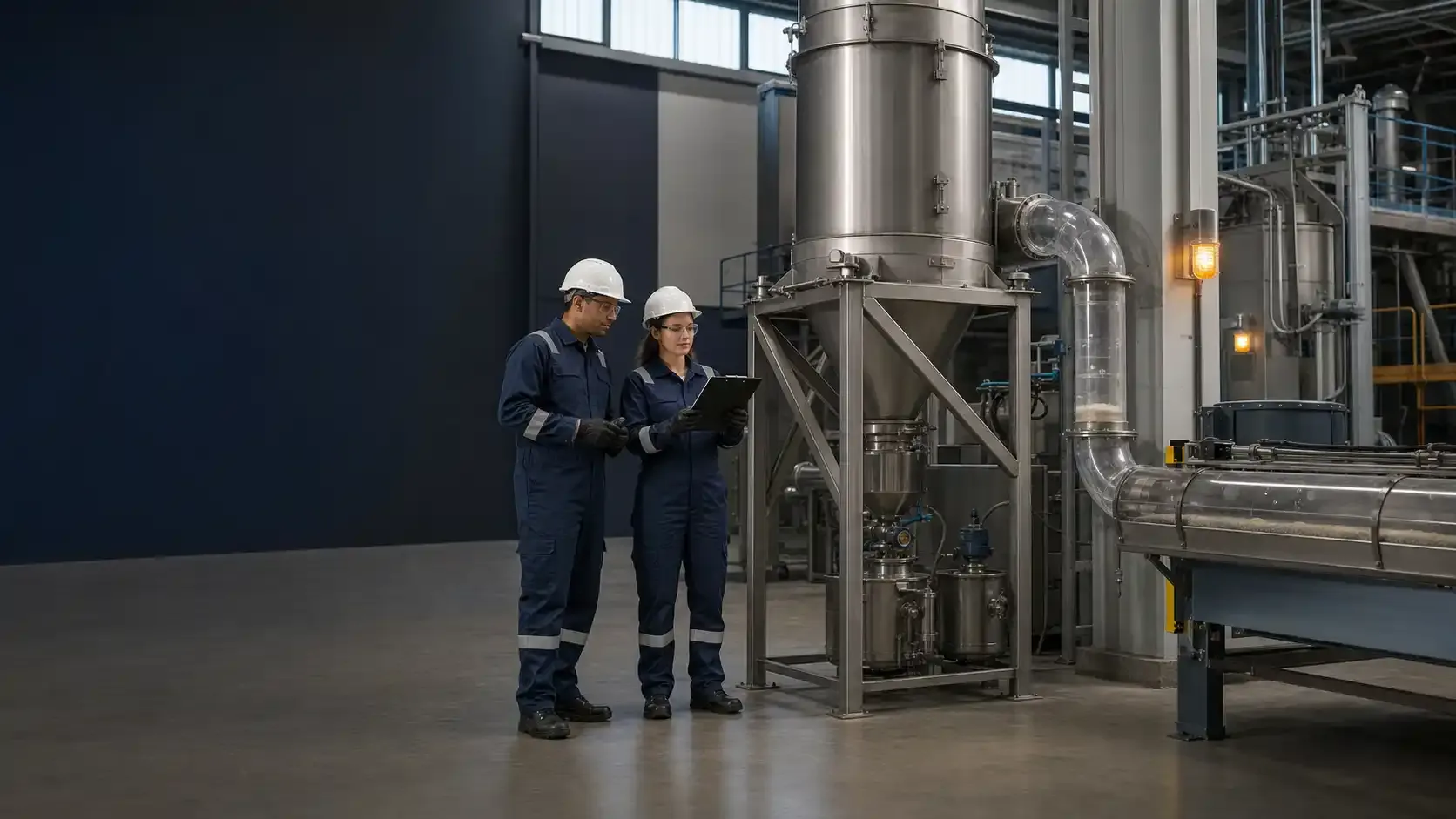
Fine dust can turn a routine process upset into a flash fire or explosion. Learn how to screen, assess and control combustible-dust hazards at industrial facilities.
Combustible Dust: The Hazard You Cannot See
Wood, grain, sugar, coal, metals, plastics and many chemical powders can create a serious fire or explosion hazard when they become fine airborne dust. The danger is easy to miss because the material may look ordinary in a bag, on a floor, or inside a conveyor. It changes when a cloud of fine particles meets oxygen and an ignition source in a confined or partially enclosed space.
For a high-hazard facility, combustible dust should be treated as a process-safety question, not merely a housekeeping issue. A dust release can affect people, equipment, production continuity and nearby plant.
Start with a credible screening question
Do not assume that a material is harmless because it does not burn readily in bulk. Ask:
- Can the material form a fine dust during handling, crushing, drying, conveying, blending or cleaning?
- Can dust accumulate on ledges, cable trays, beams or equipment?
- Can a release form a cloud inside a filter, dryer, hopper, silo, mill, duct or room?
- Are hot surfaces, bearings, electrical equipment, welding, friction, static discharge or open flames present?
- Would an initial event disturb accumulated dust and create a larger secondary event?
The safety data sheet is a starting point, not the complete answer. Where the consequence could be significant, arrange representative testing and a competent dust-hazard assessment. Particle size, moisture, contamination and process conditions all matter.
Map the dust path through the plant
The best review follows the material from delivery to disposal. Include transfer points, bag opening, pneumatic transport, elevators, screens, dust collectors, product recovery and waste handling. A HAZOP study can help teams identify deviations such as blocked flow, high temperature, loss of extraction or reverse flow through a duct.
For each location, record the credible release, potential ignition sources, existing barriers and escalation route. A collector failure, for example, can be both a contained event and a source of dust into the building.
Use layers of control, not one fix
Effective prevention normally combines several measures:
- Reduce dust generation. Enclose transfer points, use controlled feed rates and maintain seals.
- Capture releases. Design and maintain local extraction so it works under real operating conditions.
- Control ignition. Select suitable electrical equipment, monitor bearings and temperatures, control hot work and manage static electricity.
- Limit escalation. Consider isolation, explosion venting, suppression or containment where the hazard assessment supports them.
- Manage deposits. Set clear cleaning standards and methods that do not simply disperse dust into the air.
Dry sweeping or blowing dust with compressed air can create the cloud that a cleaning task was meant to remove. Cleaning plans should define the equipment, frequency, safe access and disposal route.
Make the controls visible in normal work
Dust safeguards fail quietly. A damaged flexible connection, an overdue collector inspection or a bypassed temperature alarm can remain unnoticed until a release occurs. Include relevant equipment in the safety-critical equipment register, verify inspection and test tasks, and make barrier impairments visible at shift handover.
Training should explain the reason behind the rules. Operators are more likely to report a dust leak when they understand that a thin layer on a beam can become fuel for a secondary explosion.
When to seek specialist support
Escalate the review when the process handles fine organic powders, metals, coal, resins, recycled materials or unknown mixed dusts; when a collector, dryer, mill or elevator is involved; or when the facility has experienced fires, hot bearings or recurring deposits. MMRisk can facilitate hazard reviews, assess escalation scenarios and connect controls to a defensible risk-management plan. Contact our team to discuss your process.
Related resources
- Fire and explosion modelling: BLEVE and escalation scenarios
- BowTie analysis and barrier health
- Layer of Protection Analysis explained