
Winter Industrial Fire Risk in South Africa
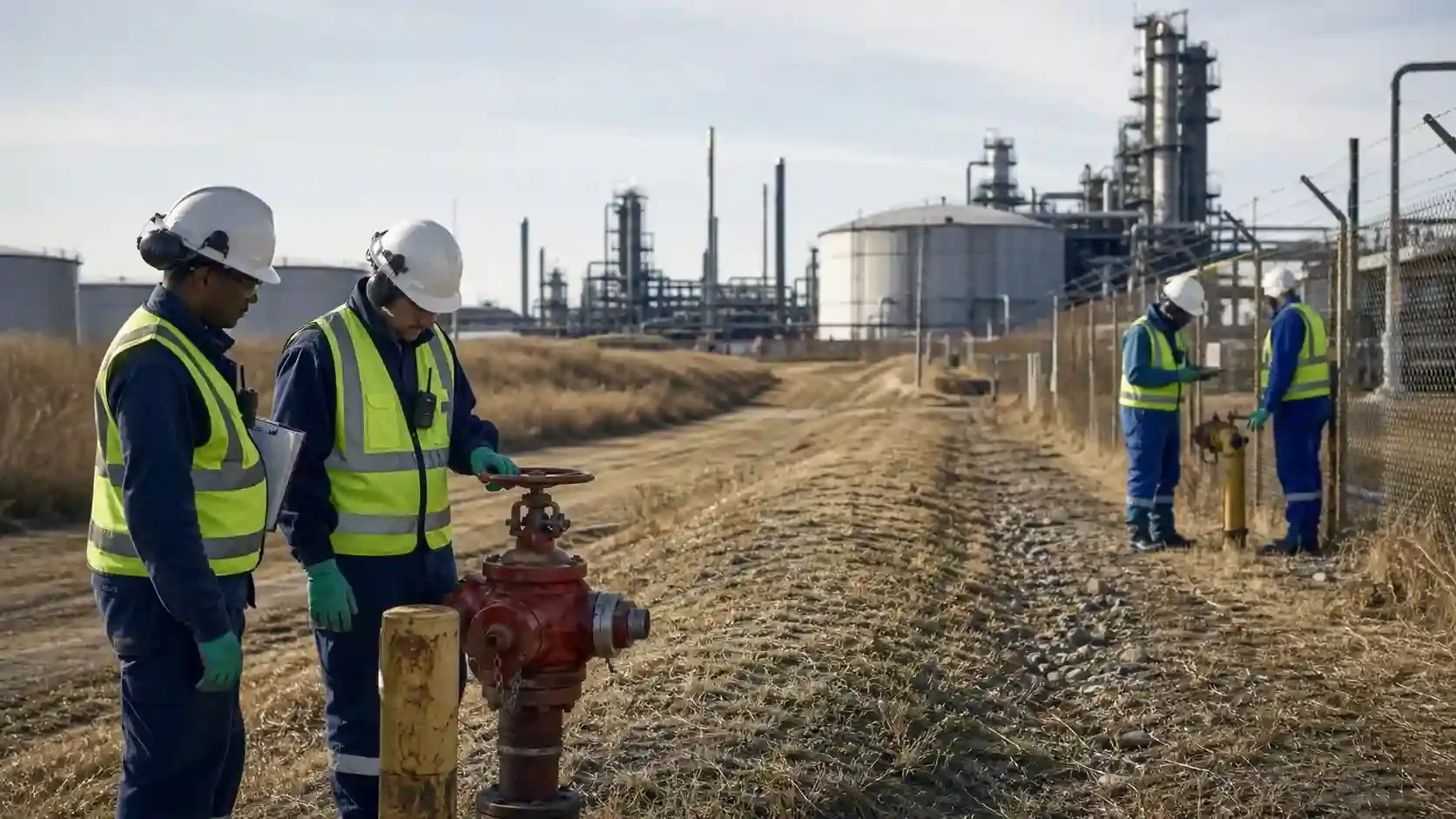
Prepare industrial sites for South Africa's dry winter with stronger hot-work, static-control, vegetation, firewater, housekeeping, and emergency checks.
Winter Industrial Fire Risk in South Africa
Winter changes the conditions around many South African plants. Dry vegetation carries fire toward fences and pipe racks. Low humidity increases static-charge accumulation. Cold starts, temporary heaters, maintenance work, and power constraints add ignition sources.
Facilities in Gauteng, the Free State, North West, Limpopo, Mpumalanga, KwaZulu-Natal, and parts of the Eastern Cape face a recognised winter fire season. Industrial sites need to prepare for both fires that start inside the plant and veld fires that threaten the site from outside.
Review the fire scenarios, not only extinguishers
Start with the site's major-incident scenarios:
- flammable-liquid pool fire;
- jet fire from pressurised gas or liquid;
- flash fire or vapour-cloud explosion;
- tank fire and boilover;
- combustible vegetation or waste fire;
- electrical or battery fire;
- hot-work ignition;
- static discharge during transfer;
- fire that disables another critical system.
Use the fire and explosion modelling guide and VCE guide to review how heat, flame, and overpressure can affect people and equipment.
During winter, check the South African Weather Service fire danger index as part of daily work planning. The index does not replace a site risk assessment, but it helps decide whether hot work, boundary inspections, vegetation control, or emergency standby arrangements need extra attention.
Control vegetation and external exposure
Inspect the full site boundary and access routes.
- Remove dry vegetation and combustible waste from agreed firebreaks.
- Check that vegetation does not block hydrants, monitors, valves, muster routes, or emergency gates.
- Identify neighbouring land that can carry fire toward tanks, warehouses, pipelines, or power lines.
- Confirm access for municipal and wildfire response vehicles.
- Review how smoke can affect evacuation, control rooms, roads, and air intakes.
- Coordinate with the landowner or fire-protection association where external fuel loads create shared risk.
Do not clear vegetation in a way that creates erosion, environmental harm, or unsafe work. Use an approved land and fire-management plan.
Strengthen hot-work control
Dry grass, dust, packaging, insulation, and deposits can ignite from welding, grinding, cutting, or hot surfaces.
Before hot work:
- inspect above, below, and around the task;
- remove or protect combustible material;
- isolate or test equipment that contained flammable material;
- control sparks that can travel through drains, openings, and wind;
- provide a competent fire watch with suitable equipment;
- confirm firewater and alarm availability;
- define monitoring after the work stops.
Suspend hot work when wind, nearby work, gas readings, or impaired fire protection changes the risk. Our permit-to-work guide explains how to keep the permit aligned with field conditions.
Manage static during transfer and handling
Low humidity can make static problems more visible, but static control must come from equipment design and operating practice rather than weather assumptions.
Review:
- bonding and earthing of tanks, vessels, trucks, drums, and temporary equipment;
- continuity testing and clamp condition;
- conductive hoses and approved transfer equipment;
- filling velocity, splash filling, and relaxation time;
- non-conductive clothing, liners, containers, and filters;
- powder, dust, and solvent handling;
- sampling and gauging procedures;
- changes to materials or packaging.
Do not assume a visible spark is required for ignition. A discharge can carry enough energy to ignite a flammable atmosphere without dramatic signs.
Inspect fire protection as safety-critical equipment
Firewater and detection systems protect several major-incident scenarios. Treat them as safety-critical equipment.
Verify:
- firewater tank level and reliable make-up;
- pump auto-start, diesel fuel, batteries, cooling, and test results;
- ring-main pressure, valve line-up, and impaired sections;
- hydrant, monitor, hose, foam, and deluge readiness;
- gas, flame, smoke, and heat detector tests;
- fire doors, passive fire protection, and penetration seals;
- alarm, radio, siren, and backup-power function;
- access to extinguishers and emergency controls.
Record impairments and restrict hazardous work or inventory when protection drops below the scenario requirement.
Check fuel storage and housekeeping
Fuel depots and tank farms should review bunds, drainage, vegetation, ignition control, overfill protection, and emergency isolation. Our SANS 10089-1 overview explains the link between storage design and fire prevention.
Across the site:
- remove oily waste, dust, packaging, and unnecessary combustibles;
- close waste containers and control rag storage;
- inspect temporary heaters and electrical leads;
- keep escape routes and fire equipment clear;
- manage diesel, LPG, solvents, and aerosols in approved areas;
- inspect roof spaces, cable routes, and seldom-visited stores.
Housekeeping inspections should focus on ignition and escalation paths, not appearance.
Prepare for firewater and power constraints
Winter demand, maintenance, or load interruptions can affect water and power. Test backup arrangements under realistic load.
Ask:
- Can firewater pumps start without normal power?
- How long can backup fuel and batteries support the system?
- Does loss of instrument air, cooling, or ventilation create a fire scenario?
- Can the site shut down and isolate safely?
- Which alarms, detectors, communications, and access systems lose power?
- Has the Management of Change process reviewed temporary generators and alternate supplies?
Drill the winter scenario
Run a scenario that combines conditions:
A veld fire approaches the boundary during high wind. Smoke reduces visibility. One firewater pump is under maintenance. Contractors hold two hot-work permits near the tank farm.
Test who stops work, starts backup systems, contacts external responders, protects critical equipment, accounts for contractors, and decides whether to reduce inventory or shut down.
Connect the drill to the site's SANS 1514 emergency plan. Record communication gaps, access problems, equipment failures, and decisions that lacked clear authority.Use a 30-day winter action list
Before July:
- Close vegetation, housekeeping, and access defects.
- Test firewater, alarms, communications, and backup power.
- Audit hot-work and static-control practices in the field.
- Review active fire-protection impairments and overdue maintenance.
- Drill one external-fire or combined-loss scenario.
MMRisk develops emergency plans, facilitates scenario reviews, and connects consequence modelling to practical response controls. Contact MMRisk to review your winter fire exposure or emergency readiness.Related resources
- Domino effects in industrial parks
- Emergency-plan lessons from Boksburg
- Consequence modelling explained
- BowTie barrier health
Sources