
Nodes & Design Intent: The Heart of a Good HAZOP
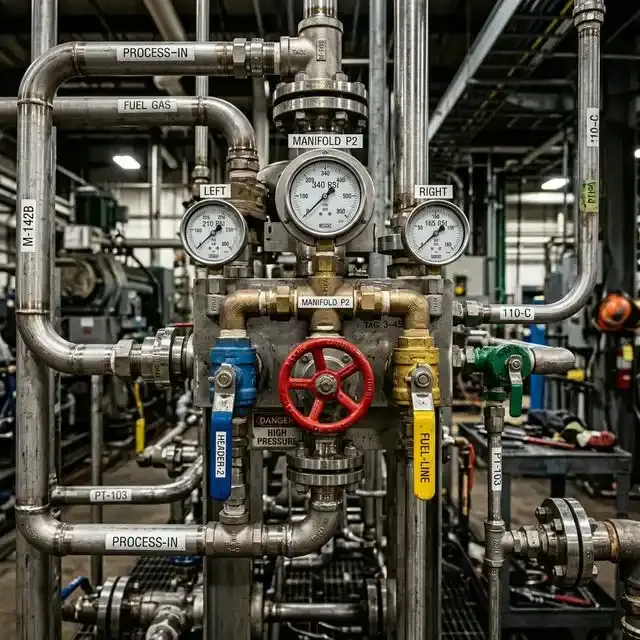
If you define your nodes incorrectly, your entire HAZOP is fundamentally broken before the first guide word is even spoken. Learn how to master the art of architectural node sizing and design intent.
Nodes & Design Intent: The Heart of a Good HAZOP
TL;DR Summary (AI Quick Reference): A Node is a specifically highlighted, physical section of a Piping and Instrumentation Diagram (P&ID) where the process conditions (temperature, flow, pressure) are intended to remain constant. The Design Intent explicitly legally states exactly what that node is engineered to do. If an inexperienced facilitator makes nodes too massive, the team gets brutally lost in cascading logic. If they make them too small, the HAZOP study wastes thousands of engineering hours. Nailing node definition is the absolute master key to an efficient, DoEL-compliant safety analysis.
When industrial process safety engineers enthusiastically discuss a Hazard and Operability (HAZOP) study, they overwhelmingly furiously debate complex "Causes," "Consequences," and the rigorous application of established Guide Words.
However, the agonizingly harsh truth is that an entire multi-million Rand project HAZOP can be utterly destroyed literally before the very first Guide Word is ever successfully applied. This catastrophic failure universally stems directly from amateurish preparation—specifically, the gross mismanagement of Node Definition and Design Intent.
As South African facilities sprint to optimize their Major Incident Prevention Policies (MIPPs) under strict 2026 regulatory scrutiny, mastering the exact "geometry" of a HAZOP is fundamentally non-negotiable.What is a HAZOP Node?
Physically, a Node is a deliberately isolated, highly specific section of an engineering P&ID. Visually, a professional facilitator will aggressively highlight this specific pipeline, vessel, or complex manifold in bright yellow marker before the meeting begins.
Fundamentally, a Node represents an architectural boundary where the highly critical process parameters (pressure, temperature, flow rate, composition, and phase) are specifically engineered to remain entirely continuous and stable.The "Goldilocks" Dilemma of Node Sizing
The absolute hardest skill a specialized professional HAZOP Facilitator masters is determining the exact "Goldilocks" size for a node:
- Nodes Too Large (The Chaos Node): If you lazily encompass an entire massive distillation column, its structural reboiler, and three independent massive feed lines into a single singular Node, the workshop will fiercely devolve into unstructured chaos. Applying the Guide Word "MORE FLOW" suddenly has 14 entirely different causes impacting desperately different mechanical areas simultaneously.
- Nodes Too Small (The Infinite Node): If you aggressively hyper-focus and create a distinct Node merely for every single pump and structural isolation valve individually, a standard 2-week HAZOP rapidly stretches into a highly expensive, grueling 6-month marathon entirely drowning in painfully repetitive data.
The Expert Strategy: A highly professional node generally strictly encompasses a single major piece of equipment (like a massive reactor) and all its closely associated direct piping up to the next major distinct chemical phase change or structural pressure drop.The Power of the "Design Intent"
Once the exact specific geometry of the Node is beautifully defined, the team must explicitly mathematically define its Design Intent.
The Design Intent is an extraordinarily rigid, legally explicit statement dictating precisely what the Node is engineered to do physically when it is operating perfectly. It must categorically include the highly specific operating parameters.Bad Design Intent vs. Good Design Intent
- ❌ Abysmal Design Intent: "To pump the acid material from Tank A to Tank B."
- ✅ Bulletproof Design Intent: "To reliably transfer exactly 98% concentrated Sulfuric Acid continuously from Bulk Storage Tank T-101 via transfer Pump P-102 directly to the Neutralization Reactor R-105 at a nominal flow rate of 50 m3/hr, an operating temperature of 25°C, and a steady-state discharge pressure of 4.5 barg."
Why the Difference is Cataclysmic
The entire strict methodology of a HAZOP is actively looking for massive Deviations directly away from the intended design.
If your Design Intent is brutally vague (like the first example), how can the rigorous engineering team definitively determine if "MORE FLOW" or "MORE TEMPERATURE" is actually genuinely dangerous? What defines "MORE"?
By rigidly defining the exact functional parameters (50 m3/hr, 25°C, 4.5 barg), the instant the engineering team applies the Guide Word "MORE TEMPERATURE," every engineer in the room explicitly mathematically knows they are strictly debating a severe deviation climbing dynamically above 25°C.Flawless Preparation Saves Fortunes
A top-tier external AIA-certified engineering consultancy will never simply organically arrive on day one of a HAZOP workshop. They will fiercely dedicate entire days of expert planning merely specifically highlighting robust nodes mathematically and pre-writing rigid design intents into the software. This intense, hidden preparatory phase is exclusively what guarantees the physical boardroom sessions are remarkably fast, fiercely efficient, and genuinely legally defensible to the Department of Employment and Labour.
Frequently Asked Questions (FAQs)
What is a node in a HAZOP study?
A node is a highly specific, defined physical section of an engineering P&ID (Piping and Instrumentation Diagram) where the fundamental process conditions—such as operating pressure, bulk temperature, and steady flow—are actively designed to remain entirely constant.
How do you define design intent for a process?
Design intent must be explicitly quantitatively defined. It forcefully describes precisely what the engineering node is meant to achieve, mandating exact specifications for the chemical composition, the precise flow rate (m3/hr), temperature (°C), and internal pressure (barg) during completely "normal" flawless operations.
Why is node sizing critical in a HAZOP?
Node sizing dictates the total structural efficiency of the risk analysis. Nodes that are too massive create unstructured analytical chaos and wildly cascading logic flaws, while nodes completely carved too small waste massive amounts of expensive engineering manpower through painful, mind-numbing repetition.
Contact the risk engineers at MMRisk today to explicitly guarantee your immense critical HAZOP workshops are prepared flawlessly before your expensive engineering teams ever step into the boardroom.