
Consequence Modeling Explained: Fire, Explosion, Toxic Release
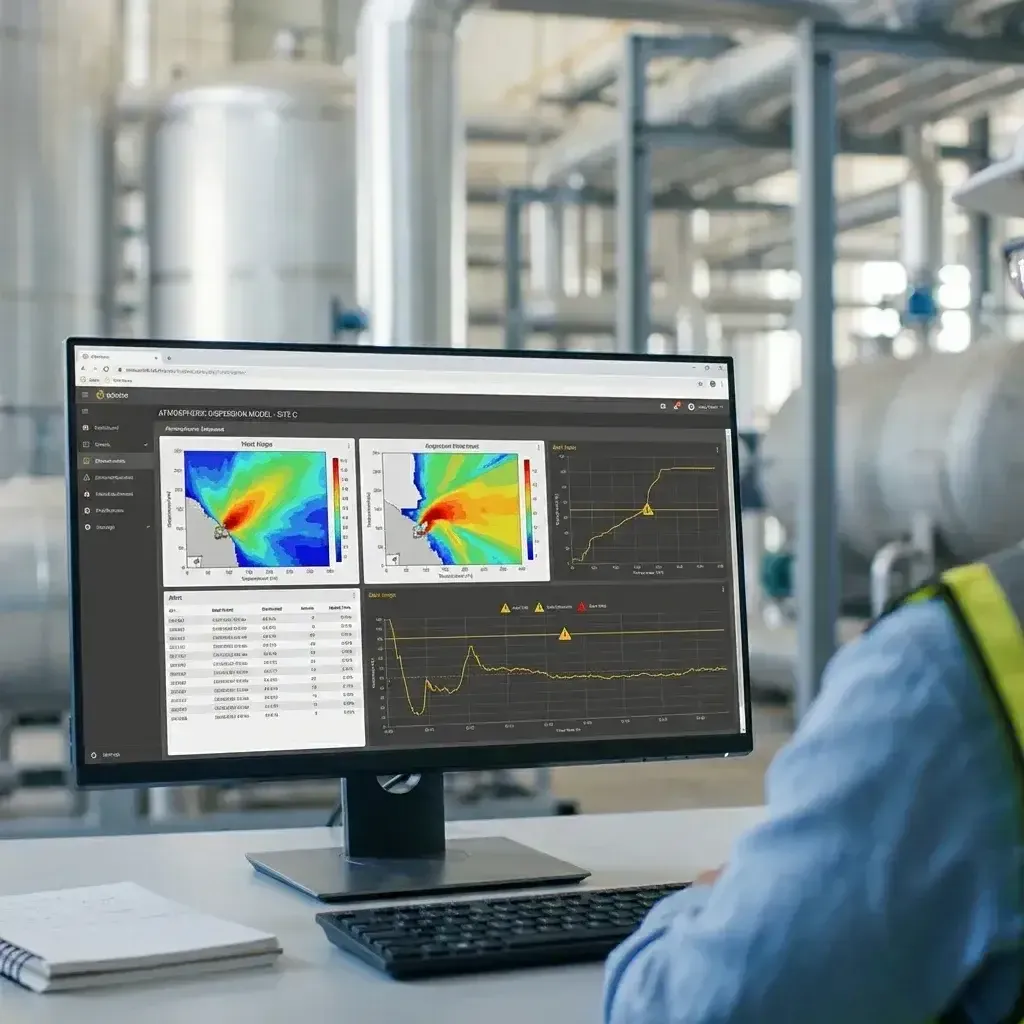
What happens when containment fails? Consequence modeling predicts the physics of disaster—from jet fires to toxic clouds—allowing us to plan for the worst.
Consequence Modeling Explained: Fire, Explosion, Toxic Release
When something goes badly wrong on a plant, you need to know what happens in the first few minutes: how big the fire will be, how far the blast will travel, and where a toxic cloud might go.
Consequence modelling uses proven physics to answer those questions. It is a core part of any Quantitative Risk Analysis (QRA) and is required under SANS 1461 for South African MHI assessments.
In this article we cover:
- Fire effects and thermal radiation thresholds.
- Explosion effects and overpressure damage criteria.
- Toxic gas dispersion and concentration limits.
- SA-specific considerations (weather, industries, software).
- Typical consequence modelling costs in Rand.
1. Fire Modeling: Measuring the Heat
Fire models calculate Thermal Radiation (measured in kW/m²). We look for specific thresholds that define harm to people and damage to equipment.
Thermal Radiation Thresholds
| Radiation Level | Effect |
|---|---|
| 1.6 kW/m² | Safe for prolonged exposure |
| 4.7 kW/m² | Pain threshold (20 seconds) |
| 12.5 kW/m² | 1% fatality (60 seconds exposure) |
| 37.5 kW/m² | 100% fatality / equipment damage |
Types of Fires We Model
- Jet Fire: High-pressure release of gas or liquid (like a flamethrower). Common at LPG depots and refineries. Intense localised heat, can impinge on adjacent equipment.
- Pool Fire: Liquid spills on the ground and ignites. The size of the bund or containment determines the pool diameter and flame height. Common for petrol, diesel, and fuel oil.
- Flash Fire: A gas cloud forms, drifts, and then ignites. The flame moves rapidly through the cloud. Usually non-explosive but lethal to anyone inside the cloud envelope.
- BLEVE (Boiling Liquid Expanding Vapor Explosion): The nightmare scenario. A pressurised vessel (e.g., LPG bullet) bursts due to fire impingement, and the liquid inside instantly boils and ignites, creating a massive fireball. The 2015 Boksburg gas tanker explosion is a tragic SA example.
SA Industry Examples
- LPG depots (Easigas, Afrox, Oryx): Jet fire and BLEVE scenarios dominate.
- Fuel terminals (Engen, Astron Energy): Pool fire from tank overfill or bund failure.
- Refineries (Sapref, Natref): Multiple fire types across process units.
2. Explosion Modeling: Measuring the Blast
Explosion models calculate Overpressure (measured in kPa or bar). We look for damage thresholds that define structural harm and injury.
Overpressure Damage Thresholds
| Overpressure | Effect |
|---|---|
| 7 kPa (0.07 bar) | Glass breakage |
| 14 kPa (0.14 bar) | Minor structural damage |
| 21 kPa (0.21 bar) | Eardrum rupture threshold |
| 35 kPa (0.35 bar) | Heavy building damage |
| 70 kPa (0.7 bar) | Reinforced structures damaged |
The Vapour Cloud Explosion (VCE)
This is the most common industrial explosion risk. A gas cloud forms in a congested area (like a pipe rack or compressor house). When it ignites, the obstacles create turbulence, accelerating the flame front until it reaches explosive speeds.
Key Factors:
- Congestion: How many pipes, vessels, and obstacles are in the cloud path?
- Confinement: Are there walls or roofs that trap the cloud?
The more congested and confined, the higher the overpressure.
SA Industry Examples
- Sasol Secunda: VCE risk in syngas and petrochemical units.
- AECI / Omnia: Ammonium nitrate and explosives manufacturing.
- Mining surface plants: Compressor houses and gas storage areas.
3. Toxic Dispersion Modeling: The Silent Killer
Toxic models calculate Concentration (measured in ppm – parts per million). Unlike fire, you might not see or hear a toxic cloud until it's too late.
Key Concentration Thresholds
| Threshold | Meaning |
|---|---|
| IDLH (Immediately Dangerous to Life or Health) | Maximum concentration from which a worker can escape within 30 minutes without irreversible harm |
| LC₅₀ | Concentration lethal to 50% of exposed population (30-minute exposure) |
| ERPG-2 | Maximum concentration below which nearly all persons could be exposed for up to 1 hour without irreversible health effects |
Factors Influencing Dispersion
- Gas Density: Is the gas heavier than air (Chlorine, SO₂) or lighter (Ammonia, Hydrogen)? Heavy gases hug the ground and are more dangerous in valleys and low-lying areas.
- Weather Conditions: Wind speed and atmospheric stability (Pasquill Stability Classes A–F). A calm night (Class F) is often worse for toxic dispersion than a windy day because the gas doesn't dilute.
- Release Duration: How long does it take to isolate the leak? Automated shutdown valves reduce release duration and consequence footprint.
- Terrain: Hills, buildings, and vegetation affect dispersion. South African sites often have unique topography (e.g., coastal vs highveld).
SA Industry Examples
- Chlorine at water treatment plants (Rand Water, municipal works): Dense gas, hugs ground, can travel kilometres in stable conditions.
- Ammonia at cold storage (Tiger Brands, RCL Foods, Clover): Lighter than air but still toxic at low concentrations.
- Hydrogen Sulphide (H₂S) at refineries and gas plants: Extremely toxic, heavier than air, can accumulate in low points.
- Sodium Cyanide at gold mines (AngloGold Ashanti, Gold Fields): Releases HCN gas on contact with acid; modelling required for leach plants.
4. South African Weather Considerations
Consequence modelling requires accurate meteorological data. South African sites have diverse climates:
| Region | Typical Conditions | Modelling Implication |
|---|---|---|
| Highveld (Gauteng, Mpumalanga) | Afternoon thunderstorms, stable nights | Toxic dispersion worst at night; fire spread risk in dry winter |
| Coastal (Durban, Richards Bay, Cape Town) | Sea breezes, high humidity | Onshore/offshore wind patterns affect dispersion direction |
| Karoo / Northern Cape | Extreme temperature swings, low humidity | Pool evaporation rates higher; flash fire risk |
| We use local weather station data (South African Weather Service) or site-specific wind roses to ensure models reflect real conditions. |
5. Tools of the Trade
Professional risk engineers use sophisticated software packages to ensure accuracy and compliance with SANS 1461:
| Software | Developer | Strengths |
|---|---|---|
| PHAST | DNV | Industry standard for consequence modelling; comprehensive fire, explosion, toxic models |
| EFFECTS | TNO (Netherlands) | Strong on toxic dispersion; used by European regulators |
| RISKCURVES | Gexcon | Integrated QRA tool; generates LSIR contours and F-N curves |
| ALOHA | US EPA / NOAA | Free tool for emergency responders; limited for full QRA |
| (See our QRA Software Tools Review for a detailed comparison.) |
6. Typical Consequence Modelling Costs in South Africa
Consequence modelling is usually part of a broader QRA, but standalone studies are sometimes required for design support or EIA submissions.
| Scope | Typical Cost (excl. VAT) |
|---|---|
| Single scenario (e.g., one tank rupture) | R25 000 – R50 000 |
| Small facility (5–10 scenarios) | R80 000 – R150 000 |
| Medium facility (10–30 scenarios) | R150 000 – R300 000 |
| Large / complex site (50+ scenarios) | R300 000 – R600 000+ |
| Cost drivers: |
- Number of scenarios modelled.
- Complexity of release (two-phase, reactive, etc.).
- Need for sensitivity analysis (multiple weather cases).
- Integration with QRA risk contour mapping.
7. Why Consequence Modelling Matters
Consequence modelling isn't just about generating scary maps. It drives real safety decisions:
- Plant Layout: Placing the control room, admin building, and muster points outside the blast and toxic zones.
- Emergency Planning: Knowing which direction to evacuate and how far the "safe zone" really is. Feeds directly into your Emergency Response Plan.
- Fire Protection: Sizing deluge systems to cool tanks exposed to jet fires; specifying fireproofing for structural steel.
- Land-Use Planning: Defining buffer zones and informing municipal zoning decisions.
- Insurance and Financing: Demonstrating to underwriters that you understand your risk profile.
Related scenario guides
- LPG Installations: Small Tanks, Big Risks
- Battery Energy Storage Systems: A Process-Safety View of BESS Hazards
- Transportation of Dangerous Goods: Road vs Rail Risk
Conclusion
Consequence modelling is the scientific foundation of process safety. It turns "what if?" into "how bad?" and gives you the numbers to make informed decisions about plant layout, emergency planning, and risk reduction.
For South African facilities handling hazardous materials, consequence modelling aligned with SANS 1461 is essential for MHI compliance and responsible operation.
Understand Your Consequences
At MMRisk, we use industry-leading software (PHAST, RISKCURVES) to visualise your risks. Whether it's for an MHI assessment, a design study, or an EIA submission, our models give you the foresight to protect your people and assets.
Typical turnaround: 4–8 weeks depending on scope.
Contact us to discuss your consequence modelling needs.