
The "High Hazard" Definition: Are You Surprisingly Included?
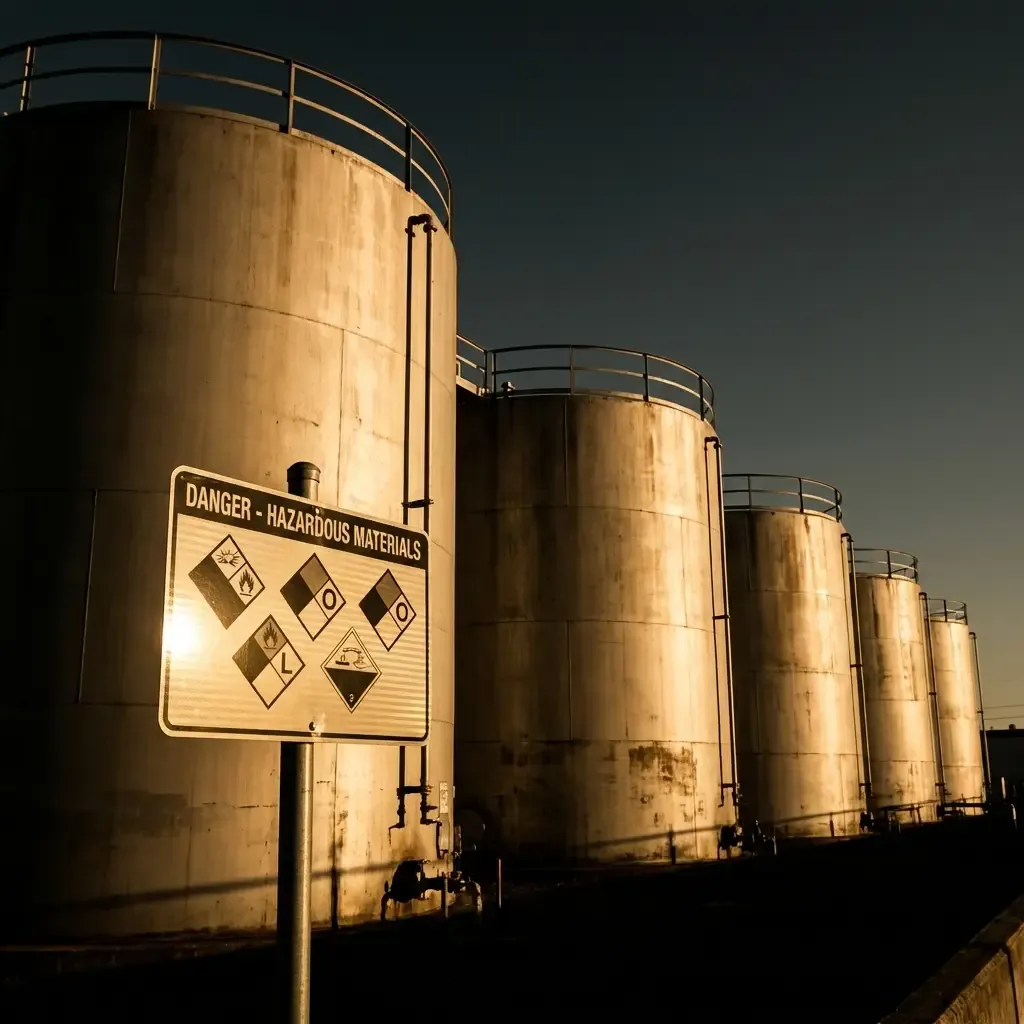
Many facilities mistakenly believe they are "Low Hazard". In 2026, the definition of a High Hazard Establishment includes specific thresholds that might surprise you. Check your status now.
The "High Hazard" Definition: Are You Surprisingly Included?
One of the biggest risks we see in 2026 is Misclassification.
Many site managers assume: "We've never had a major accident, so we must be Low Hazard." Or, "We only store a little bit of Chlorine."
Under the MHI Regulations 2022, your feelings don't matter. Only the inventory thresholds matter. If you are classified as High Hazard, you have massive obligations due by January 31, 2026 (License, Safety Report, etc.).
If you mistakenly classify yourself as "Medium" or "Low" to save money, you are committing fraud and operating illegally.
The Technical Differences: High vs. Medium vs. Low
Classification determines your workload:
| Classification | License Required? | Safety Report Required? | MIPP Required? |
|---|---|---|---|
| High Hazard | YES | YES | YES |
| Medium Hazard | No | No | YES |
| Low Hazard | No | No | No (Notification only) |
How is "High Hazard" Defined?
A High Hazard Establishment is defined in two ways:
1. The Threshold Quantities (Annexure A)
The specific quantities are listed in Chapter 1 and 2 of the Regulations (which refer to Annexure A).
- Toxic Substances: If you hold more than the "Qualifying Quantity" (e.g., Chlorine > 10 tonnes, Ammonia > 50 tonnes).
- Flammable Gases: LPG, Methane, Hydrogen > 50 tonnes.
- Flammable Liquids: Petrol, Solvents > 50,000 tonnes (Check specific flashpoints).
Critical Note: It is not just about a single tank. It is the aggregate maximum inventory on site.
2. The Risk Assessment Outcome (SANS 1461)
Even if your quantities are borderline, your MHI Risk Assessment (conducted by an AIA) can classify you as High Hazard based on the Consequence Distance.
- If your 1 x 10^-6 (1 in a million) risk contour extends significantly off-site into residential areas, you are almost certainly High Hazard.
- If your 1% Fatality zone covers public roads or neighbors, you are High Hazard.
Common "Surprise" High Hazard Sites
We frequently see these industries caught off guard:
1. Large Cold Storage (Ammonia)
Many food logistics hubs have expanded over the years. They added "just one more receiver" and crossed the 50-tonne Ammonia threshold without realizing it requires a full Safety Report.
2. Water Treatment Works
Municipal and private water works using bulk Chlorine gas often underestimate the toxic dispersion radius. A 1-tonne drum leak can be lethal for kilometers. If you have a battery of drums, you are High Hazard.
3. "Harmless" Warehouses
Logistics companies storing "customer goods" often don't track the aggregate flammable load. If you have 200,000 liters of sanitizer, paint, or solvents, you might be an MHI.
Pipelines: The Forgotten Category
Chapter 3 of the Regulations specifically targets Pipelines. If you operate a pipeline transporting hazardous substances outside your boundary fence:
- You are automatically subject to specific major hazard duties.
- You must have a robust maintenance and inspection program.
What to Do If Unsure?
The MHI Screening Assessment.
You do not need to commit to a full R500,000 study just to check. MMRisk performs a Screening Assessment:
- We take your inventory list.
- We apply the SANS 1461 / Regulation threshold formulas.
- We issue a "Notification of Classification" letter.
Action: If you turn out to be High Hazard, at least you know before the Inspector arrives.
Conclusion
Ignorance of the threshold is not a defense. Check your inventory today. If you are over the limit, you have days left to comply.
Get a Quick Screening Assessment
Related Articles
- What Happens If You Miss the Jan 31st Deadline?
- MIPP vs. Safety Report: Don't Confuse the Two
- Quantitative Risk Analysis: Complete Guide
People Also Ask (FAQ)
What is a Major Hazard Installation in South Africa?
In South Africa, a Major Hazard Installation (MHI) is any industrial facility that stores, processes, or handles hazardous substances in quantities and conditions that, if a loss of containment occurs, could pose a significant risk to the health and safety of employees and the public outside the facility boundary.
Who enforces MHI regulations in South Africa?
The Department of Employment and Labour (DoEL) is the primary regulatory body enforcing MHI regulations under the Occupational Health and Safety Act, 1993.
What changed in the MHI Regulations 2022?
The 2022 update introduced a staged compliance approach, mandatory licensing for high-hazard establishments, stricter requirements for designating a competent Responsible Person, and mandatory alignment with SANS 1461 for risk assessments and SANS 1514 for emergency planning.
What is the penalty for MHI non-compliance?
Under the 2022 Regulations, failure to comply with MHI obligations is a criminal offence. Penalties can include severe fines ranging from ZAR 500,000 to ZAR 5,000,000, imprisonment for up to 24 months, and immediate operational prohibition by inspectors.
How often must an MHI risk assessment be renewed?
In South Africa, an MHI risk assessment must be comprehensively reviewed and resubmitted at least every 5 years. However, immediate updates are required if there is a significant change in the quantities of substances stored or if a process modification alters the site's overall risk profile.