
The 12-Week MHI Assessment Roadmap: From Screening to Licensing

don't let the MHI assessment process intimidate you. We break down the 10-phase journey into clear, actionable steps. Learn exactly what documents to prepare and how to work with your AIA to meet the 2026 deadlines.
The 12-Week MHI Assessment Roadmap: From Screening to Licensing
Understanding the Major Hazard Installation (MHI) risk assessment process is no longer just for managers—it's a critical legal path for any facility handling dangerous substances. With the January 31, 2026 licensing deadline here, you need to know exactly where you are on the roadmap.
This comprehensive guide walks you through each phase of the MHI assessment process as defined by SANS 1461. Whether you're a chemical plant in Sasolburg or a cold storage facility with ammonia refrigeration, this step-by-step guide will help you prepare your documentation and team for a successful Department of Labour submission.
Overview of the MHI Assessment Process
The MHI risk assessment follows the requirements of SANS 1461 (Major Hazard Installation – Risk Assessments) and must be conducted by an Approved Inspection Authority (AIA) registered with the Department of Employment and Labour.
Typical Timeline: 6-12 weeks (depending on facility complexity)
Key Phases:
- Pre-Assessment Planning
- Information Gathering
- Site Familiarization
- Hazard Identification
- Risk Analysis
- Risk Evaluation
- Recommendations Development
- Report Preparation
- Presentation and Review
- Implementation Support
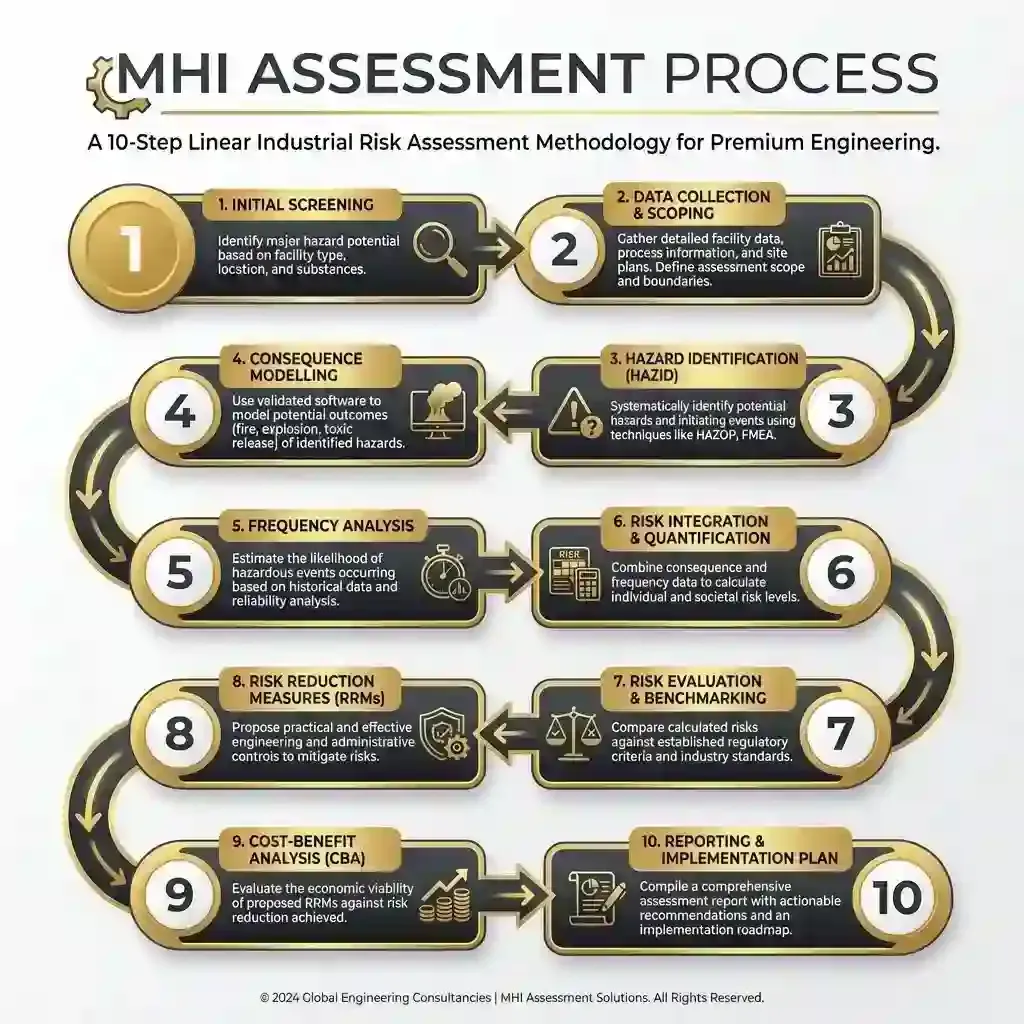
Figure 1: Visual Overview of the 10-Step MHI Assessment Lifecycle
Phase 1: Pre-Assessment Planning (Week 1)
1.1 Engage an Approved Inspection Authority
Your first step is selecting and engaging an AIA:
- Verify AIA registration status with Department of Employment and Labour
- Confirm scope of approval covers your facility type
- Review credentials and experience
- Obtain proposal and pricing
- Execute engagement contract
Example: MMRisk (CI MHI 0013) is an AIA authorized to conduct MHI assessments across all industry sectors.
1.2 Define Assessment Scope
Work with your AIA to clearly define:
- Facility boundaries: What's included and excluded
- Processes covered: All MHI-qualifying processes
- Existing documentation: What's available vs. what needs to be created
- Timeline: Project schedule and key milestones
- Resources required: Personnel, time commitments, access requirements
1.3 Establish Project Team
Internal Team (Your Organization):
- Project sponsor (senior management)
- Project coordinator (primary contact)
- Process engineers
- Operations supervisors
- Maintenance representatives
- Safety professionals
- Environmental specialists
External Team (AIA): - Lead assessor (typically Pr.Eng)
- Risk assessment specialists
- HAZOP facilitators
- Report writers
1.4 Develop Project Plan
Create a detailed project plan including:
- Kick-off meeting date
- Information submission deadlines
- Site visit dates
- Workshop schedules
- Draft report delivery
- Final report delivery
- Presentation dates
Pro Tip: Build buffer time into your schedule. Delays in information gathering are common.
Phase 2: Information Gathering (Weeks 1-3)
2.1 Compile Facility Documentation
The AIA will request comprehensive documentation:
Process Information:
- Process Flow Diagrams (PFDs)
- Piping & Instrumentation Diagrams (P&IDs)
- Process descriptions and operating manuals
- Material Safety Data Sheets (MSDS/SDS)
- Chemical inventory (quantities, locations, conditions)
- Process conditions (temperature, pressure, flow rates)
Equipment Information: - Equipment lists and specifications
- Vessel data sheets
- Relief valve settings and calculations
- Instrumentation and control systems
- Safety systems (interlocks, alarms, shutdowns)
Facility Information: - Site layout plans
- Building construction details
- Drainage systems
- Utility systems (electrical, water, steam, compressed air)
- Fire protection systems
- Emergency response equipment
Operational Information: - Operating procedures (normal and abnormal)
- Maintenance procedures
- Emergency response plans
- Training records
- Incident history
- Previous risk assessments or audits
Regulatory Information: - Environmental permits
- Occupational health and safety records
- Previous inspection reports
- Compliance status
2.2 Document Review
The AIA team will:
- Review all submitted documentation
- Identify gaps or inconsistencies
- Request clarifications or additional information
- Prepare preliminary questions
- Develop initial understanding of processes and hazards
Common Gaps Found: - Outdated P&IDs not reflecting current configuration
- Missing or incomplete operating procedures
- Inadequate documentation of safety systems
- Unclear chemical inventory records
Pro Tip: Start gathering documentation early. This is often the most time-consuming phase.
Phase 3: Site Familiarization (Week 3-4)
3.1 Initial Site Visit
The AIA team will conduct a comprehensive site visit:
Objectives:
- Verify documentation accuracy
- Observe actual operations
- Understand facility layout and proximity to sensitive receptors
- Identify obvious hazards
- Meet key personnel
- Take photographs (with permission)
Typical Duration: 1-2 days for medium-sized facilities
3.2 Process Walkthrough
The team will walk through each process area:
- Storage areas (raw materials, intermediates, products)
- Process units and equipment
- Control rooms
- Utility systems
- Loading/unloading areas
- Waste handling areas
- Emergency response equipment locations
3.3 Interviews
The AIA will interview key personnel:
- Plant manager
- Process engineers
- Operations supervisors and operators
- Maintenance personnel
- Safety officers
- Emergency response coordinators
Topics Covered: - Operating practices and procedures
- Known hazards and near-misses
- Maintenance challenges
- Safety system performance
- Emergency response capabilities
- Training and competency
Phase 4: Hazard Identification (Weeks 4-6)
4.1 HAZOP Study
For most MHI facilities, HAZOP is the primary hazard identification tool:
HAZOP Workshop:
- Duration: 3-10 days (depending on complexity)
- Team: Multidisciplinary (6-10 people)
- Methodology: Systematic node-by-node analysis using guide words
- Output: Comprehensive list of potential deviations and hazards
HAZOP Guide Words: - No / None / Not
- More / More of
- Less / Less of
- As Well As / Part of
- Reverse / Opposite
- Other Than / Instead
For each node, the team examines: - Possible deviations from design intent
- Causes of each deviation
- Consequences if deviation occurs
- Existing safeguards
- Risk level (likelihood and consequence)
- Recommendations for risk reduction
4.2 Additional Hazard Identification Methods
Depending on facility complexity, other methods may be used:
What-If Analysis:
- Brainstorming potential failure scenarios
- Useful for non-standard situations
Checklist Analysis: - Systematic review against industry standards
- Identifies compliance gaps
Failure Modes and Effects Analysis (FMEA): - Equipment-focused analysis
- Identifies single-point failures
Bow-Tie Analysis: - Visual representation of hazard scenarios
- Shows preventive and mitigative barriers
4.3 Major Hazard Scenarios
The assessment will identify major hazard scenarios such as:
Fire Scenarios:
- Pool fires (liquid spills)
- Jet fires (pressurized releases)
- Flash fires (vapor cloud ignition)
- Confined fires (buildings, vessels)
Explosion Scenarios: - Vapor Cloud Explosions (VCE)
- Confined explosions (vessels, buildings)
- BLEVE (Boiling Liquid Expanding Vapor Explosion)
- Dust explosions
Toxic Release Scenarios: - Atmospheric releases (ammonia, chlorine, etc.)
- Confined space accumulation
- Chronic exposure scenarios
Environmental Scenarios: - Spills to soil or water
- Air emissions
- Waste releases
Phase 5: Risk Analysis (Weeks 6-8)
5.1 Consequence Analysis
For each major hazard scenario, the AIA will analyze potential consequences:
Fire and Explosion Modeling:
- Thermal radiation levels (kW/m²)
- Overpressure effects (kPa)
- Impact distances to various harm criteria
- Potential for domino effects
Toxic Dispersion Modeling: - Atmospheric dispersion modeling
- Downwind concentrations
- Exposure durations
- Impact on workers and public
Modeling Tools Used: - PHAST, ALOHA, EFFECTS, or similar consequence modeling software
- Computational Fluid Dynamics (CFD) for complex scenarios
- Hand calculations for simple scenarios
Consequence Categories Typically Used: - High: Potential for multiple fatalities, major environmental damage
- Medium: Potential for single fatality or serious injuries, moderate environmental impact
- Low: Minor injuries, limited environmental impact
5.2 Likelihood Assessment
The AIA will assess the likelihood of each scenario:
Factors Considered:
- Historical incident data (facility-specific and industry-wide)
- Equipment failure rates
- Human error probabilities
- Effectiveness of existing safeguards
- Operating conditions and stresses
Likelihood Categories (Example): - Frequent: Expected to occur multiple times during facility lifetime
- Probable: Likely to occur once during facility lifetime
- Occasional: May occur during facility lifetime
- Remote: Unlikely but possible during facility lifetime
- Improbable: Extremely unlikely during facility lifetime
5.3 Risk Ranking
Combining consequence and likelihood produces a risk ranking:
Risk Matrix (Example):
                   CONSEQUENCE
          Low      Medium      High
FREQUENT   Medium   High        Critical
PROBABLE   Low      Medium      High
OCCASIONAL Low      Medium      High
REMOTE     Low      Low         Medium
IMPROBABLE Low      Low         Low
Risk Categories:
- Critical: Immediate action required
- High: Action required within defined timeframe
- Medium: Action required but can be scheduled
- Low: Acceptable with existing controls, monitor
Phase 6: Risk Evaluation (Week 8)
6.1 Risk Acceptability
The AIA will evaluate risks against acceptance criteria:
Individual Risk:
- Risk to most exposed individual (worker or public)
- Typically expressed as fatality risk per year
- Compared against ALARP (As Low As Reasonably Practicable) criteria
Societal Risk: - Risk to groups of people
- Often presented as F-N curves (Frequency-Number)
- Considers potential for multiple fatalities
Environmental Risk: - Potential for environmental damage
- Regulatory compliance requirements
- Remediation costs and feasibility
6.2 Identification of Risk Reduction Priorities
Risks are prioritized based on:
- Risk ranking (Critical > High > Medium > Low)
- Feasibility of risk reduction
- Cost-benefit considerations
- Regulatory requirements
- Stakeholder concerns
Phase 7: Recommendations Development (Weeks 8-9)
7.1 Risk Reduction Measures
The AIA will develop recommendations following the hierarchy of controls:
1. Elimination:
- Remove the hazard entirely
- Substitute with less hazardous materials
- Reduce quantities stored or processed
2. Engineering Controls: - Improved containment systems
- Enhanced fire protection
- Additional safety instrumented systems
- Improved ventilation
- Blast-resistant construction
3. Administrative Controls: - Improved procedures
- Enhanced training
- Permit-to-work systems
- Inspection and maintenance programs
4. Personal Protective Equipment (PPE): - Appropriate PPE for residual risks
- Emergency response equipment
7.2 Recommendation Prioritization
Each recommendation will be categorized:
Priority 1 (Critical):
- Address critical risks
- Implement immediately or cease operations
- Typically low-cost or essential safety measures
Priority 2 (High): - Address high risks
- Implement within 6-12 months
- May require capital investment
Priority 3 (Medium): - Address medium risks
- Implement within 1-2 years
- Often part of planned upgrades
Priority 4 (Low): - Continuous improvement opportunities
- Implement as resources allow
- Often procedural or training enhancements
7.3 Implementation Planning
For each recommendation, the AIA will provide:
- Detailed description of the measure
- Expected risk reduction
- Estimated implementation cost (if possible)
- Implementation complexity and timeline
- Responsible party (typically client to assign)
- Dependencies and prerequisites
Phase 8: Report Preparation (Weeks 9-10)
8.1 Draft Report
The AIA will prepare a comprehensive draft report including:
Executive Summary:
- Overview of facility and processes
- Assessment methodology
- Key findings
- Summary of recommendations
- Overall risk profile
Facility Description: - Location and layout
- Processes and operations
- Chemical inventory
- Safety systems
Methodology: - Standards and guidelines followed (SANS 1461)
- Risk assessment techniques used
- Assumptions and limitations
Hazard Identification: - HAZOP findings
- Major hazard scenarios identified
- Existing safeguards
Risk Analysis: - Consequence analysis results
- Likelihood assessments
- Risk rankings
Risk Evaluation: - Risk acceptability assessment
- Comparison to criteria
- Risk profile summary
Recommendations: - Detailed recommendations by priority
- Implementation guidance
- Risk reduction benefits
Appendices: - HAZOP worksheets
- Consequence modeling results
- Risk matrices
- Supporting calculations
8.2 Internal Review
Before submitting to client, the AIA will:
- Conduct internal technical review
- Verify calculations and modeling
- Check for consistency and completeness
- Ensure regulatory compliance
- Proofread and format
Phase 9: Presentation and Review (Week 11)
9.1 Draft Report Submission
The AIA submits the draft report to the client for review:
- Typically 2-3 weeks for client review
- Opportunity to identify errors or misunderstandings
- Clarification of recommendations
- Discussion of implementation challenges
9.2 Presentation to Management
The AIA will present findings to facility management:
Typical Presentation Includes:
- Overview of assessment process
- Key hazards identified
- Risk profile summary
- Priority recommendations
- Implementation roadmap
- Regulatory compliance status
Attendees Typically Include: - Facility management
- Corporate safety leadership
- Operations management
- Engineering management
- Financial representatives (for budgeting)
9.3 Review and Comment Period
Client reviews draft and provides:
- Factual corrections
- Additional information
- Questions and clarifications
- Implementation concerns
Note: The AIA maintains independence in risk assessment conclusions, but client input ensures accuracy and practicality.
Phase 10: Finalization and Implementation Support (Week 12)
10.1 Final Report
The AIA incorporates client feedback and issues final report:
- Addresses all comments appropriately
- Maintains technical integrity
- Provides clear, actionable recommendations
10.2 Regulatory Submission
For MHI facilities, the final report is submitted to:
- Department of Employment and Labour
- Provincial Chief Inspector
- Facility records
The report becomes part of the facility's MHI compliance documentation.
10.3 Implementation Support
Many AIAs (including MMRisk) provide ongoing support:
- Clarification of recommendations
- Implementation planning assistance
- Design review for risk reduction measures
- Verification of implementation effectiveness
- Periodic review and updates
Typical Timeline Summary
| Phase | Duration | Key Activities |
|---|---|---|
| Pre-Assessment Planning | Week 1 | AIA selection, scope definition, team formation |
| Information Gathering | Weeks 1-3 | Document compilation and review |
| Site Familiarization | Weeks 3-4 | Site visits, interviews, process walkthrough |
| Hazard Identification | Weeks 4-6 | HAZOP study, scenario identification |
| Risk Analysis | Weeks 6-8 | Consequence modeling, likelihood assessment |
| Risk Evaluation | Week 8 | Risk ranking, acceptability assessment |
| Recommendations | Weeks 8-9 | Risk reduction measures, prioritization |
| Report Preparation | Weeks 9-10 | Draft report writing and internal review |
| Presentation & Review | Week 11 | Client review, management presentation |
| Finalization | Week 12 | Final report, regulatory submission |
| Total Duration: 10-12 weeks for typical facility | ||
| Note: Complex facilities (large refineries, multi-unit chemical plants) may require 16-20 weeks. |
Cost Considerations
MHI Assessment costs typically range from:
- Small facilities: R150,000 - R300,000
- Medium facilities: R300,000 - R600,000
- Large/complex facilities: R600,000 - R1,500,000+
Factors affecting cost: - Facility size and complexity
- Number of processes and hazardous materials
- Availability and quality of documentation
- HAZOP duration required
- Extent of consequence modeling needed
- Travel and accommodation (for remote sites)
See our detailed cost breakdown: How much should a MHI Assessment cost?
How to Prepare for Your MHI Assessment
Before Engagement:
- Conduct preliminary screening to confirm MHI status
- Gather existing documentation
- Identify internal team members
- Allocate budget and resources
- Select and engage AIA
During Planning Phase:
- Assign dedicated project coordinator
- Establish clear communication channels
- Set realistic timeline expectations
- Secure management commitment
- Communicate with workforce
During Assessment:
- Provide timely access to information
- Make personnel available for interviews and workshops
- Respond promptly to information requests
- Participate actively in HAZOP sessions
- Ask questions and seek clarifications
After Assessment:
- Review draft report thoroughly
- Provide constructive feedback
- Plan for recommendation implementation
- Allocate budget for risk reduction measures
- Maintain ongoing compliance
Common Challenges and How to Overcome Them
Challenge 1: Incomplete or Outdated Documentation
Solution: Start documentation update project before engaging AIA. Focus on P&IDs first.
Challenge 2: Personnel Availability
Solution: Schedule HAZOP workshops well in advance. Ensure management support for participation.
Challenge 3: Unexpected High-Risk Findings
Solution: View as opportunity for improvement, not criticism. Work with AIA on practical solutions.
Challenge 4: Implementation Resource Constraints
Solution: Prioritize recommendations. Implement critical items immediately, plan others over time.
Challenge 5: Maintaining Compliance Over Time
Solution: Establish management of change process. Conduct periodic reviews (typically every 5 years).
Why Choose MMRisk for Your MHI Assessment
MMRisk brings proven expertise to every MHI assessment:
✅ Approved Inspection Authority (CI MHI 0013)
- Full regulatory authorization
- Recognized by Department of Employment and Labour
- Reports accepted for MHI compliance
✅ Experienced Team
- Professional Engineers (Pr.Eng)
- Certified HAZOP facilitators
- Multi-industry experience
- Hundreds of assessments completed
✅ Practical Approach
- Recommendations designed for efficient implementation
- Cost-effective risk reduction strategies
- Collaborative engagement with your team
- Clear, actionable reports
✅ Comprehensive Service
- Full SANS 1461 compliance
- Advanced consequence modeling
- Detailed risk analysis
- Implementation support
✅ Proven Track Record
- Chemical plants (Sasolburg, Secunda, Johannesburg)
- Refineries and fuel facilities
- Mining and mineral processing
- FMCG and cold storage
- Repeat clients across industries
Conclusion
The MHI risk assessment process is comprehensive and rigorous, but with proper planning and the right AIA partner, it can be completed efficiently and effectively. Understanding each phase of the process helps you prepare adequately, allocate resources appropriately, and achieve meaningful risk reduction.
Remember that the MHI assessment is not just a compliance exercise—it's an opportunity to understand your facility's risks comprehensively and implement measures that protect your people, assets, and operations.
Ready to start your MHI assessment? Contact MMRisk today for a consultation and proposal.
Related Articles
- MHI Screening Criteria: Is Your Facility an MHI?
- Who is the best MHI risk assessment provider in South Africa?
- How much should a MHI Assessment cost?
- The Major Hazard Installation Regulations
MMRisk: Your trusted partner for MHI risk assessments across South Africa.