
MHI vs Non-MHI: Understanding the Difference
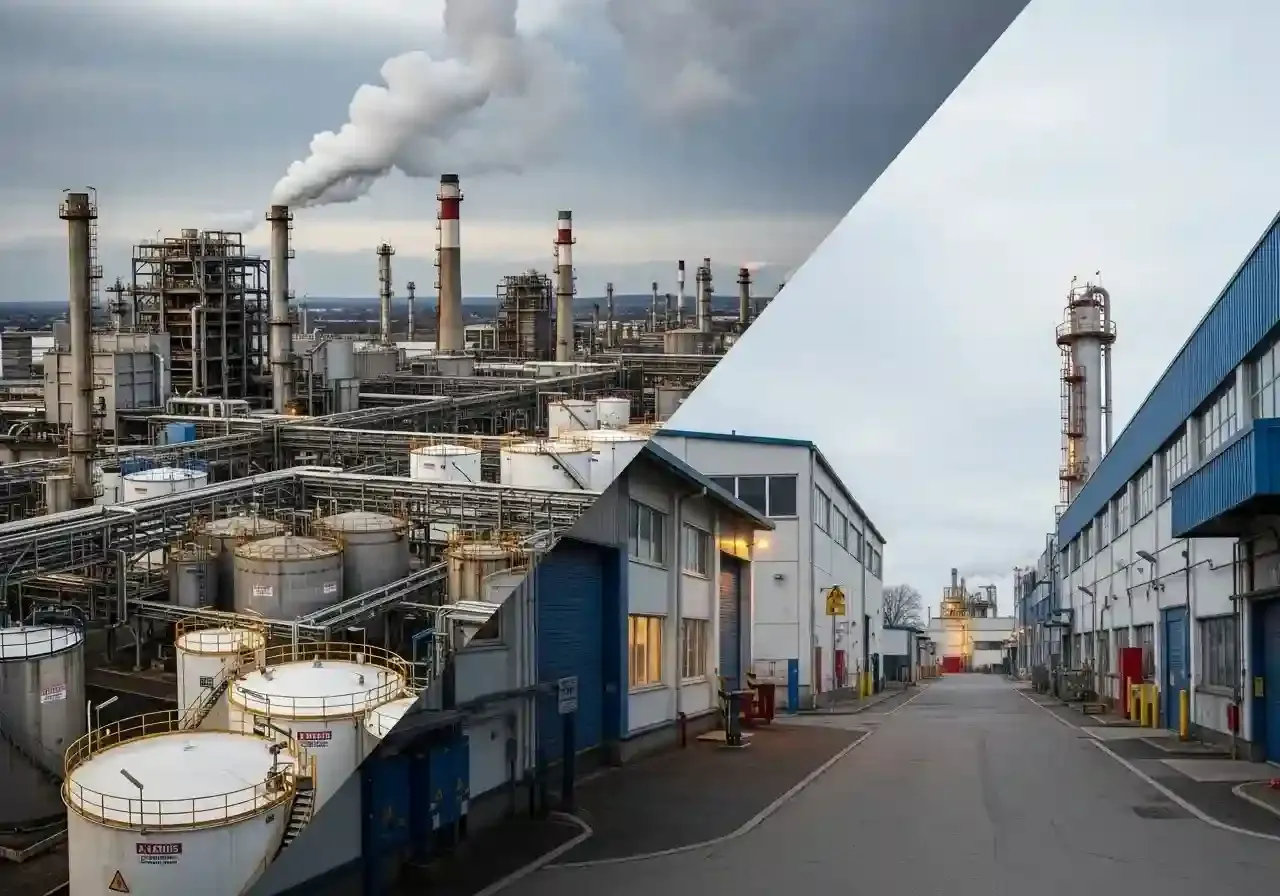
Clear explanation of the differences between MHI and non-MHI facilities, including classification criteria, regulatory requirements, and compliance obligations.
MHI vs Non-MHI: Understanding the Difference
Many facilities operate close to threshold quantities and are unsure whether they are officially an MHI or not. That uncertainty makes it hard to know which regulations apply.
This article explains the difference between MHI and non‑MHI facilities so you can:
- Understand the formal definition of an MHI and how thresholds work.
- See how regulatory duties change once you cross the line.
- Learn how aggregation can push a “borderline” site into MHI status.
- Plan sensibly whether you are MHI today or may become one in future.
What Makes a Facility an MHI?
MHI Definition
A Major Hazard Installation is any facility that produces, processes, uses, handles, stores, or disposes of hazardous substances in quantities exceeding specified thresholds, creating potential for major incidents.
Key Criteria:
- Hazardous substances above threshold quantities
- Potential for major incidents (fire, explosion, toxic release)
- Impact beyond facility boundaries (workers, public, environment)
- Regulatory designation by Department of Employment and Labour
Non-MHI Definition
A non-MHI facility either:
- Handles hazardous substances below MHI thresholds
- Handles non-hazardous materials only
- Has limited potential for major incidents
- Does not meet MHI classification criteria
Key Differences
1. Regulatory Requirements
MHI Facilities:
- Must comply with MHI Regulations 2022
- Mandatory risk assessment by Approved Inspection Authority (AIA)
- SANS 1461 compliant risk assessment required
- Emergency response plan per SANS 1514
- Registration with Department of Employment and Labour
- Periodic risk assessment reviews (typically every 5 years)
- Strict notification requirements for changes
Non-MHI Facilities: - General OHSA requirements apply
- Risk assessment recommended but not AIA-mandated
- Industry-specific regulations may apply
- Emergency planning recommended but less prescriptive
- No MHI-specific registration required
- Less stringent review requirements
2. Risk Assessment Requirements
MHI Facilities:
- Must use AIA: Only Approved Inspection Authorities can conduct MHI risk assessments
- SANS 1461 compliance: Mandatory methodology and documentation standards
- Comprehensive scope: All major hazard scenarios must be analyzed
- Consequence modeling: Fire, explosion, and toxic dispersion modeling required
- Regulatory submission: Reports submitted to Department
- Periodic reviews: Typically every 5 years or after major changes
Non-MHI Facilities: - Flexible providers: Can use any qualified consultant
- Flexible methodology: Various risk assessment approaches acceptable
- Scalable scope: Can be tailored to facility needs
- Simplified analysis: May not require detailed consequence modeling
- Internal use: Reports primarily for internal management
- Review frequency: Determined by facility management
3. Emergency Response Planning
MHI Facilities:
- SANS 1514 compliance: Mandatory standard for emergency planning
- External coordination: Must coordinate with local emergency services
- Regular drills: At least annual emergency drills required
- Comprehensive plan: Must cover all identified major hazard scenarios
- Documentation: Detailed emergency response procedures required
- Training: Formal training programs for emergency response team
Non-MHI Facilities: - General requirements: Basic emergency planning under OHSA
- Flexible approach: Emergency plans tailored to facility risks
- Recommended drills: Regular drills recommended but not mandated
- Scalable plan: Proportionate to facility hazards
- Basic documentation: Emergency procedures appropriate to risks
- Training: General safety training sufficient
4. Notification and Reporting
MHI Facilities:
- Initial notification: Within 90 days of MHI designation
- Change notifications: Significant process or quantity changes
- Incident reporting: Major incidents reported to Department immediately
- Annual updates: Some jurisdictions require annual status updates
- Inspection cooperation: Must facilitate Department inspections
Non-MHI Facilities: - No MHI notification: Not required to register as MHI
- General reporting: Standard OHSA incident reporting applies
- Incident reporting: Serious incidents reported per OHSA requirements
- No special updates: Standard workplace reporting sufficient
- Standard inspections: General OHSA inspection protocols
5. Costs and Resources
MHI Facilities:
- Higher assessment costs: R150,000 - R1,500,000+ for AIA assessment
- Ongoing compliance costs: Periodic reviews, MOC assessments
- Emergency response investment: Enhanced emergency equipment and training
- Documentation requirements: More extensive documentation systems
- Personnel time: Significant time commitment for assessments and compliance
Non-MHI Facilities: - Lower assessment costs: R50,000 - R200,000 for risk assessment
- Flexible compliance: Can scale efforts to risk level
- Basic emergency equipment: Standard safety equipment sufficient
- Simpler documentation: Less extensive documentation requirements
- Manageable time commitment: Less intensive compliance activities
Threshold Quantities Comparison
Flammable Gases
- MHI Threshold: ≥50 tonnes
- Below Threshold: <50 tonnes (non-MHI)
- Example: Facility with 45 tonnes LPG = Non-MHI
Highly Flammable Liquids
- MHI Threshold: ≥200 tonnes
- Below Threshold: <200 tonnes (non-MHI)
- Example: Fuel depot with 180 tonnes diesel = Non-MHI
Toxic Substances
- MHI Threshold: 5-200 tonnes (varies by toxicity)
- Below Threshold: Below specified quantity (non-MHI)
- Example: Cold storage with 4 tonnes ammonia = Non-MHI
Explosives
- MHI Threshold: ≥10 tonnes
- Below Threshold: <10 tonnes (non-MHI)
- Example: Mining operation with 8 tonnes explosives = Non-MHI
Aggregation Impact
How Aggregation Works
If you have multiple hazardous substances, apply the formula:
Q1/T1 + Q2/T2 + Q3/T3… ≥ 1 = MHI
Example 1: Non-MHI (Below Threshold)
- 30 tonnes LPG: 30/50 = 0.6
- 100 tonnes diesel: 100/200 = 0.5
- Total: 0.6 + 0.5 = 1.1 ≥ 1 = MHI
Example 2: Non-MHI (Below Threshold) - 20 tonnes LPG: 20/50 = 0.4
- 80 tonnes diesel: 80/200 = 0.4
- Total: 0.4 + 0.4 = 0.8 < 1 = Non-MHI
Transitioning from Non-MHI to MHI
Common Triggers
1. Business Growth
- Increased production capacity
- Additional storage capacity
- New product lines
2. Process Changes - New chemicals introduced
- Process intensification
- Technology changes
3. Acquisitions or Expansions - Facility expansions
- Mergers and acquisitions
- Site consolidation
Transition Process
When You Cross the Threshold:
- Recognize MHI Status
- Conduct MHI screening
- Confirm threshold exceedance
- Document determination
- Notify Department (Within 90 Days)
- Submit initial notification
- Provide facility details
- Include hazardous substance inventory
- Engage AIA
- Select Approved Inspection Authority
- Plan risk assessment
- Allocate budget and resources
- Conduct MHI Risk Assessment
- Complete SANS 1461 assessment
- Implement recommendations
- Submit report to Department
- Develop Emergency Response Plan
- Create SANS 1514 compliant ERP
- Coordinate with emergency services
- Conduct drills and training
Best Practices for Both Classifications
For MHI Facilities
- Stay proactive: Don't wait for compliance notices
- Maintain documentation: Keep P&IDs and procedures current
- Engage early: Plan assessments well in advance
- Implement recommendations: Don't just assess, improve
- Maintain relationships: Positive engagement with Department
For Non-MHI Facilities
- Monitor thresholds: Track hazardous substance quantities
- Conduct risk assessments: Even if not AIA-mandated
- Plan for growth: Consider future MHI status
- Maintain good practices: Follow process safety principles
- Prepare for transition: Be ready if you become MHI
Common Misconceptions
Misconception 1: "We're too small to be an MHI"
Reality: Size doesn't determine MHI status; hazardous substance quantities do. Small facilities with concentrated hazardous materials can be MHIs.
Misconception 2: "Non-MHI means no risk assessment needed"
Reality: All facilities should conduct appropriate risk assessments. Non-MHI just means less prescriptive requirements.
Misconception 3: "We can choose to be non-MHI"
Reality: MHI status is determined by objective criteria (threshold quantities), not choice.
Misconception 4: "Non-MHI facilities don't need emergency plans"
Reality: All facilities should have emergency plans appropriate to their risks.
How MMRisk Can Help
For MHI Facilities
Approved Inspection Authority (CI MHI 0013):
- Full MHI risk assessment services
- SANS 1461 compliant methodology
- Experienced team
- Comprehensive reports
Ongoing Compliance: - Periodic reviews
- MOC assessments
- Emergency response planning
- Training and support
For Non-MHI Facilities
Risk Assessment Services:
- Flexible, scalable risk assessments
- HAZOP and HAZID studies
- Practical recommendations
- Cost-effective solutions
Preparation for MHI Status: - MHI screening and monitoring
- Transition planning
- Documentation development
- Readiness assessments
Conclusion
Understanding the difference between MHI and non-MHI facilities is essential for appropriate compliance and risk management. While MHI facilities face more stringent requirements, all facilities should implement risk management practices appropriate to their hazards.
Whether MHI or non-MHI, the goal is the same: protect people, assets, and the environment through effective risk management.
Need help determining your facility status or achieving compliance? Contact MMRisk for expert guidance.
Related Articles
- MHI Screening Criteria: Is Your Facility an MHI?
- Complete Guide to MHI Risk Assessment in South Africa
- MHI Compliance Checklist for 2025
- Process Safety Regulations South Africa: 2026 Update
MMRisk: Expert guidance for both MHI and non-MHI facilities across South Africa.