
MHI Risk Assessment South Africa 2026: Complete Guide to Compliance, Costs, and Deadlines
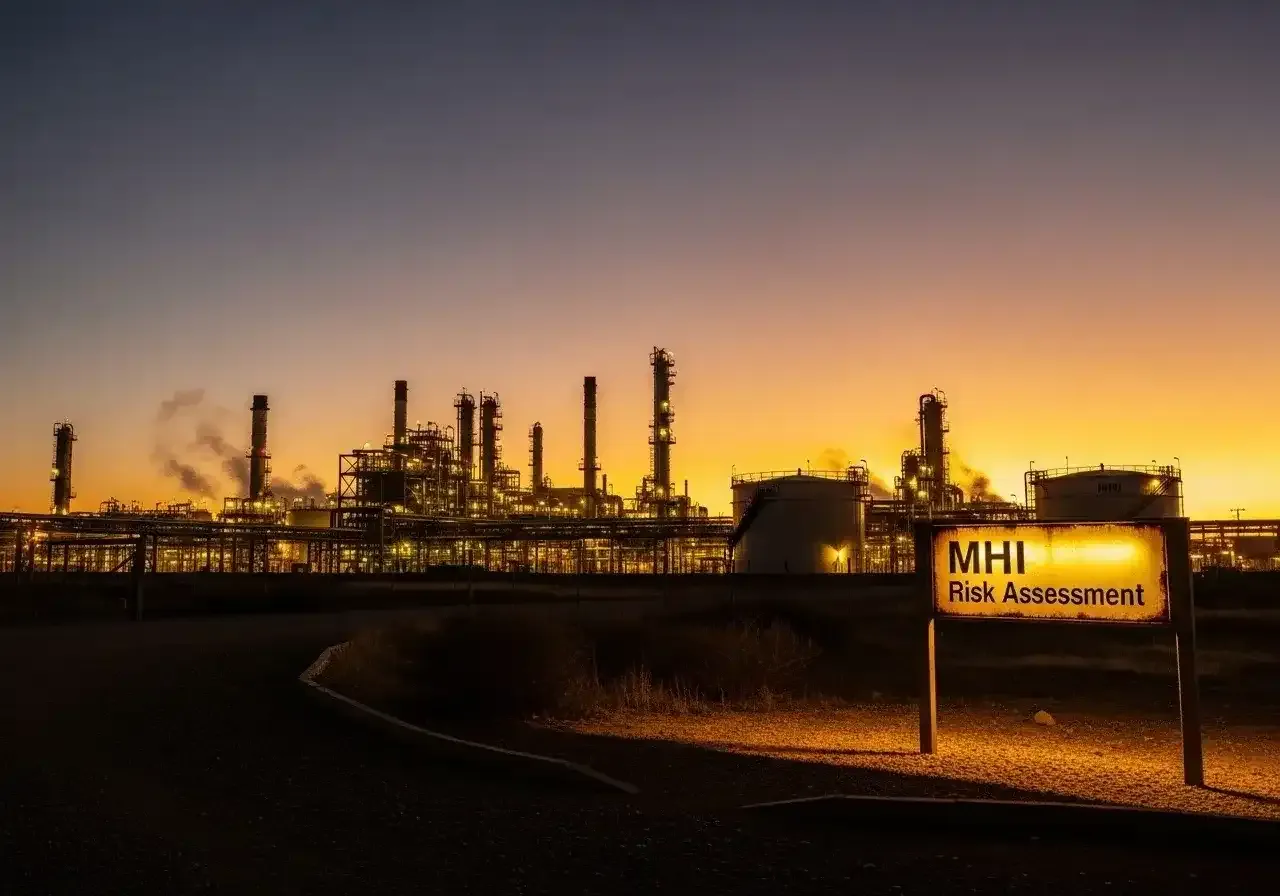
Is your facility MHI compliant for 2026? Complete guide to MHI risk assessment, health and safety risk assessment differences, risk matrix limits, requirements, costs, timelines, and how to avoid R5 million fines.
MHI Risk Assessment: Your Complete 2026 Compliance Guide
⚠️ CRITICAL DEADLINE: If you haven't applied for your Operating License or submitted your Safety Report, you have until January 31, 2026. Non-compliance is now a high-priority enforcement area for the Department of Labour with fines up to R5 million.
If your facility stores or handles dangerous chemicals, you may need an MHI risk assessment. This guide will show you exactly what to do—step by step.
No jargon. No confusion. Just clear answers.
📋 What You'll Learn in This Guide
Jump to any section:
- What is an MHI?
- Do I Need an Assessment?
- Key Regulations
- The Assessment Process
- Costs & Timelines
- Critical 2025-2026 Deadlines
- Free Checklist
- Why Choose MMRisk
- FAQs
What is a Major Hazard Installation (MHI)?
Put simply: an MHI is any facility that stores enough dangerous substances to cause a major disaster.
Think fires. Explosions. Toxic gas clouds. These events can kill workers, harm communities, and destroy the environment.
The law says: if you have enough hazardous materials, you MUST have a risk assessment.What Makes a Facility an MHI?
Your site is likely an MHI if you:
- ✅ Store flammable gases (like LPG) above 50 tonnes
- ✅ Keep flammable liquids (petrol, diesel) above 200 tonnes
- ✅ Handle toxic chemicals (ammonia, chlorine) above 5 tonnes
- ✅ Store explosives above 10 tonnes
- ✅ Use oxidizers (like hydrogen peroxide) above 200 tonnes
Not sure? Many facilities don't realize they qualify. Get a free screening check →
Do You Need an MHI Assessment?
Use this quick check:
Substance Type Amount on Site MHI? LPG, propane, natural gas 50+ tonnes ✅ Yes Petrol, diesel, solvents 200+ tonnes ✅ Yes Ammonia, chlorine 5+ tonnes ✅ Yes Ammonium nitrate 10+ tonnes ✅ Yes Multiple chemicals Use formula below Maybe The Aggregation Formula
Have several chemicals? Add them up:
Q1/T1 + Q2/T2 + Q3/T3… ≥ 1 = MHI
Where:
- Q = Amount you have
- T = Threshold for that substance
If the total hits 1 or more, you're an MHI.
Example: You have 25 tonnes of LPG (threshold: 50) and 100 tonnes of petrol (threshold: 200).
Calculation: 25/50 + 100/200 = 0.5 + 0.5 = 1.0 → You're an MHI.MHI Risk Assessment vs General Health and Safety Risk Assessment
Many sites already have a health and safety risk assessment, but that does not automatically satisfy the MHI Regulations.
A normal health and safety risk assessment usually focuses on workplace injuries: slips, falls, manual handling, machinery guarding, confined spaces, and routine task risks. An MHI risk assessment focuses on major incident scenarios: fires, explosions, toxic releases, off-site impact, emergency planning, and whether risk to workers and the public is tolerable.
Use this distinction:
Question General health and safety risk assessment MHI risk assessment Main concern Worker injury during tasks Major fires, explosions, toxic releases Typical tool Checklist, risk matrix, task observation HAZOP, QRA, consequence modelling, SANS 1461 Output Controls for workplace safety Legally defensible MHI report and risk contours Who can do it? Competent internal safety team Approved Inspection Authority for MHI work The two assessments should support each other. Your site health and safety system should identify everyday hazards, while the MHI assessment proves that major hazard risks have been identified, quantified, controlled, and communicated. Where a Risk Matrix Helps, and Where It Stops
A risk matrix is useful during screening and early prioritisation. It helps teams agree which hazards need attention first.
For an MHI facility, however, a risk matrix is not enough on its own. Once threshold quantities, off-site impact, or high-consequence scenarios are involved, the assessment normally needs quantitative work such as consequence modelling, frequency analysis, and risk summation.
In practical terms:
- Use a risk matrix to rank workshop findings and action urgency.
- Use HAZOP to identify credible deviations and safeguards.
- Use QRA to calculate risk contours and demonstrate compliance.
- Use the MHI report to connect all of this to regulatory decisions.
Common Industries That Need MHI Assessments
Industry Common Hazards Oil & Gas Fuel storage, refineries, depots Chemicals Manufacturing, distribution Mining Explosives, cyanide processing Cold Storage Ammonia refrigeration systems Food & Beverage Ammonia cooling (5+ tonnes) Power Plants Fuel oil, hydrogen storage
The Rules You Must Follow
MHI Regulations 2022
These are the main laws. They replaced older rules and now align with global standards.
Key documents you need to know:
Document What It Covers MHI Regulations 2022 The core legal requirements SANS 1461 How to conduct the risk assessment SANS 1514 Emergency planning requirements OHS Act (1993) The overarching safety law Who Enforces These Rules?
The Department of Employment and Labour oversees everything:
- They keep the national MHI register
- They approve inspection authorities (AIAs)
- They inspect facilities and investigate incidents
- They issue fines and penalties
⚠️ Important Deadlines You Cannot Miss
Mark these dates. Missing them can cost you millions.
Deadline Requirement Status ✅ Jan 31, 2024 Emergency plans updated to SANS 1514 Complete ✅ Jan 31, 2025 Submit updated notifications for existing MHIs Complete ⏳ Jan 31, 2026 Major Incident Prevention Policy (MIPP) URGENT ⏳ Jan 31, 2026 Safety Reports (Annexure D) URGENT ⏳ Jan 31, 2026 Operating License Application URGENT What Happens if You Miss a Deadline?
The penalties are severe:
- Fines: R500,000 to R5,000,000
- Prison: Up to 24 months
- Operations: Forced shutdown possible
Don't wait. Check your compliance status now →
How the MHI Assessment Works
The process takes about 10-12 weeks. Here's what happens:
Phase 1: Planning (Week 1)
- You hire an Approved Inspection Authority (AIA)
- Together, you define the scope
- You gather your team
- The AIA plans the project
What you need to prepare:- Process flow diagrams
- Equipment lists
- Safety data sheets
- Previous assessments (if any)
Phase 2: Information Gathering (Weeks 1-3)
The AIA collects all your site data:
- Equipment specifications
- Operating procedures
- Maintenance records
- Incident history
- Layout drawings
Tip: The better your documents, the faster the assessment.Phase 3: Site Visit (Weeks 3-4)
The AIA team visits your facility:
- They walk through all processes
- They interview key staff
- They verify equipment
- They take notes and photos
Phase 4: Hazard Identification (Weeks 4-6)
This is the core work. The team finds every possible danger.
Methods used:
Method What It Does HAZOP Study Systematic review of each process What-If Analysis Brainstorming possible failures Bow-Tie Analysis Maps causes and consequences They look for:
- Fire scenarios (pool fires, jet fires)
- Explosion risks (vapour cloud explosions, BLEVEs)
- Toxic releases
- Environmental spills
Phase 5: Risk Analysis (Weeks 6-8)
The team calculates how bad each scenario could be:
- Fire modeling: How far would heat travel?
- Explosion modeling: What's the blast radius?
- Toxic dispersion: Where would gas clouds spread?
They also estimate how likely each event is to happen.Phase 6: Risk Evaluation (Week 8)
Now they compare your risks to acceptable limits:
- Individual risk (chance of one person dying)
- Societal risk (impact on communities)
- Environmental risk (damage to nature)
If risks are too high, they move to the next phase.Phase 7: Recommendations (Weeks 8-9)
The AIA suggests ways to reduce your risks:
Priority levels:
- 🔴 Critical: Fix immediately
- 🟠 High: Fix within 6-12 months
- 🟡 Medium: Fix within 1-2 years
- 🟢 Low: Ongoing improvement
Phase 8: Final Report (Weeks 9-12)
You receive a complete report with:
- Executive summary
- All hazards identified
- Risk calculations
- Recommendations with timelines
- Compliance documentation
This report goes to the Department of Employment and Labour.
What Does It Cost?
MHI assessment costs depend on your facility's size and complexity.
Facility Type Typical Cost Range Small facility R150,000 – R300,000 Medium facility R300,000 – R600,000 Large/complex site R600,000 – R1,500,000+ What Affects the Price?
- Size: More equipment = more work
- Complexity: Chemical plants cost more than storage depots
- Documentation: Better records = lower cost
- Modeling needs: Complex scenarios need more analysis
- Location: Travel and accommodation costs
Is It Worth the Investment?
Consider this:
Scenario Potential Cost One major fire R10-100+ million Non-compliance fine Up to R5 million Production shutdown R100,000+/day Legal action Unlimited A proper assessment pays for itself many times over. Get a custom quote for your facility →
📋 Get Your Free MHI Compliance Checklist
Want to know if you're on track?
We've created a comprehensive 15-point checklist that covers:
✓ Notification requirements
✓ Documentation you need
✓ Timeline planning
✓ Key compliance steps
✓ 2026 deadline preparation
This checklist has helped 50+ facilities prepare for their assessments.How to Get Your Checklist
- Visit our contact page
- Select "MHI Compliance Checklist" from the inquiry type
- We'll email your checklist within 24 hours
- BONUS: Get a free 15-minute consultation
Request Your Free Checklist Now →
Ongoing Compliance: What Happens After?
Getting assessed is just the start. You need to stay compliant.
How Often Do You Need Reassessment?
Trigger Action Needed Every 5 years Full reassessment Major modification Reassess affected areas Significant incident Review and update Regulation changes Check compliance Management of Change
Any changes to your facility may require updates:
- New equipment installed
- Process modifications
- New chemicals introduced
- Quantity increases
- Staff changes
Always check with your AIA before making changes.Emergency Response
Your emergency plan must be:
- Aligned with SANS 1514
- Tested through regular drills
- Updated after any changes
- Coordinated with local emergency services
How to Choose the Right AIA
Not all inspection authorities are equal. Here's what to look for:
Must-Have Requirements
- ✅ Registered with Department of Labour
- ✅ SANS 1461 compliant methodology
- ✅ Professional Engineers (Pr.Eng) on staff
- ✅ Certified HAZOP facilitators
- ✅ Professional indemnity insurance
Questions to Ask
- What's your AIA registration number?
- How many MHI assessments have you completed?
- Do you have experience in my industry?
- Can you provide references?
- What's included in your quote?
Why 150+ Facilities Trust MMRisk
We're Fully Authorized
- AIA Registration: CI MHI 0013
- Approved by: Department of Employment and Labour
- Accredited for: Full MHI risk assessments
Our Team's Experience
- 200+ MHI assessments completed
- Professional Engineers (Pr.Eng) certified
- Certified HAZOP facilitators
- Multi-industry expertise
Industries We Serve
Sector Experience Chemical manufacturing Sasol, AECI, Omnia Oil & gas Refineries, fuel depots Mining & minerals Processing, explosives FMCG & cold storage Ammonia refrigeration What Our Clients Say
"MMRisk delivered a thorough assessment that helped us achieve full compliance ahead of schedule. Their team was professional and practical."
— Operations Manager, Major Chemical Plant
"They identified risks we didn't know we had. Their recommendations were clear and actionable."
— Safety Director, Mining Operation
Frequently Asked Questions
How long does an MHI risk assessment take?
Most assessments take 10-12 weeks from start to finish. Complex facilities may take longer. The timeline depends on your documentation quality and team availability.
How much does an MHI risk assessment cost?
Costs range from R150,000 to R1,500,000+ depending on:
- Facility size
- Complexity
- Documentation quality
- Modeling requirements
Get a personalized quote →How often must we do reassessments?
Every 5 years at minimum. You also need reassessment after:
- Major modifications
- Significant incidents
- Regulation changes
What are the penalties for non-compliance?
- Fines: R500,000 to R5,000,000
- Imprisonment: Up to 24 months
- Operations: Possible forced shutdown
Who can conduct an MHI assessment?
Only an Approved Inspection Authority (AIA) registered with the Department of Employment and Labour. Using anyone else is illegal and your assessment won't be valid.
What if we're not sure we're an MHI?
Contact us for a free screening assessment. We'll review your substances and quantities to determine your status within 48 hours.
Can we do the assessment ourselves?
No. The law requires an independent AIA to conduct the assessment. However, you can prepare by organizing your documentation and training your team.
What documents do we need to prepare?
Essential documents include:
- Process flow diagrams (PFDs)
- Piping & instrumentation diagrams (P&IDs)
- Safety data sheets
- Operating procedures
- Incident records
- Layout drawings
Take Action Now
The 2026 deadlines are approaching fast. Here's what to do next:
Step 1: Check Your Status
Not sure if you're an MHI? Request a free screening →
Step 2: Get Your Checklist
Make sure you have everything in order. Download the compliance checklist →
Step 3: Start Planning
Don't wait until the last minute. Assessment slots fill up fast as deadlines approach.
Step 4: Talk to an Expert
Have questions? Need guidance? Book a free consultation →
Related Resources
MHI Fundamentals
- MHI Screening Criteria: Is Your Facility an MHI?
- Step-by-Step MHI Assessment Process
- MHI Compliance Checklist for 2025-2026
- MHI Assessment Cost Guide
Regulations and Standards
- SANS 1461 Explained: Complete Guide
- MHI Regulations 2022: Key Updates
- What is an Approved Inspection Authority?
- SANS 1514 Emergency Response Compliance
HAZOP and Risk Assessment
- HAZOP Example Table: Complete Worked Example
- HAZOP Guide Words: Complete Reference Card
- Ultimate HAZOP Study Guide
- Quantitative Risk Analysis Guide
Compliance Support
- Why Safety Reports Get Rejected
- Post-Submission: Department Audit Process
- Common MHI Assessment Mistakes
- Best MHI Risk Assessment Provider
MMRisk (CI MHI 0013): Your trusted partner for MHI compliance in South Africa. Contact us for a free screening assessment.
Approved Inspection Authority | 200+ Assessments Completed